
Most basement leaks aren’t actually caused by the holes you see, but by the invisible hydrostatic pressure you don’t. It’s frustrating to spend your weekends attempting basement leak repair only to find a new puddle after the next heavy rain. You’re likely tired of conflicting advice and the constant anxiety that moisture is compromising your foundation or fueling mold growth. We understand that your home is your most significant investment, and seeing it vulnerable to water damage is a serious structural concern.
This guide provides a professional action plan that moves beyond temporary surface patches. You’ll learn how to identify the root cause of infiltration and implement permanent solutions like interior basement drainage systems or sump pump installations. We’ll walk you through a diagnostic checklist designed to restore structural integrity and protect your property. Since basement failures occur more frequently than any other component in residential construction, a methodical approach is essential. By the end of this article, you’ll have a clear path to a bone-dry home and the peace of mind that comes with a 30% average return on investment at resale for a properly managed foundation.
Key Takeaways
- Identify the true source of moisture by distinguishing between surface condensation and active structural seepage using professional field tests.
- Execute immediate safety protocols to mitigate property damage and prepare your space for a professional diagnostic assessment.
- Evaluate permanent basement leak repair solutions, such as interior drainage systems and sump pump installations, that address the root cause of water pressure.
- Learn the essential questions to ask a specialist to ensure you receive a professional-grade solution with a long-term, transferable warranty.
- Implement a long-term maintenance checklist to monitor your system’s performance and ensure your basement remains bone-dry during heavy rain.
Diagnostic Checklist: Identifying the Source of Your Basement Leak
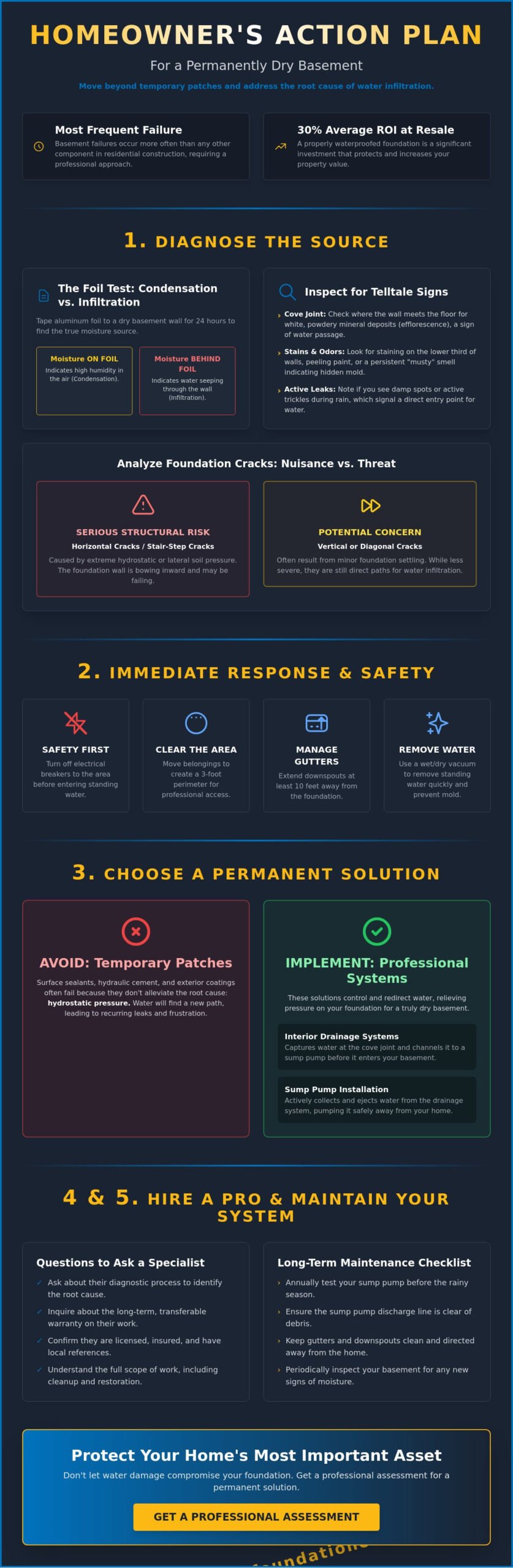
Effective basement leak repair starts with a precise diagnosis. You cannot fix what you haven’t accurately identified. Many homeowners mistake simple condensation for a serious foundation breach. Tape a square of aluminum foil to your basement wall to verify the source. Leave it for 24 hours. If moisture forms on the outside of the foil, your issue is high humidity. If the wall behind the foil is wet, you have active water infiltration from the soil.
Inspect the “cove joint” next. This is the area where your foundation wall meets the floor slab. It’s a common failure point because the two concrete pours are not chemically bonded. High hydrostatic pressure pushes groundwater through this seam. Look for efflorescence; it appears as white, powdery mineral deposits. These crystals prove that water is traveling through the concrete and evaporating, leaving salt behind. This mineral buildup is a clear sign of long-term moisture passage that will eventually degrade the concrete’s integrity.
Visual Signs of Water Infiltration
Check the lower third of your foundation walls for staining or peeling paint. These are early indicators of moisture saturation. You might notice “musty” odors before you see standing water. This smell often indicates hidden mold growth behind finished walls or under flooring. Document whether you see active trickles during rain or just damp spots. Active trickles suggest a direct path for water entry that requires immediate professional intervention to prevent structural erosion.
Distinguishing Seepage from Structural Failure
Examine your walls for bowing or tilting. Moisture often acts as a catalyst for structural instability. When soil expands with water, it exerts lateral pressure against your foundation. This pressure can cause horizontal cracks or stair-step patterns in block walls. Use our guide on types of foundation cracks and what they mean to determine if your leak is a symptom of a shifting foundation.
Understanding different Basement waterproofing methods is vital for long-term protection. Vertical cracks often result from minor settling, but horizontal cracks indicate a serious structural risk that requires professional reinforcement. Ignoring these signs leads to progressive damage. We focus on identifying these root causes to ensure your repair is permanent rather than a temporary patch. Professional diagnostics identify whether the water is a nuisance or a threat to your home’s safety.
Immediate Response Checklist: Mitigating Damage Before Repair
Safety is the primary concern when you discover water infiltration. Turn off the electrical breakers immediately if water is pooling near outlets, baseboard heaters, or appliances. You should never step into standing water until you’ve confirmed the area is electrically safe. This initial precaution is the most critical step in any basement leak repair process. Once the area is secure, clear a three-foot perimeter around the leaking sections. Professional inspectors require unobstructed access to foundation walls and cove joints to perform an accurate diagnostic assessment.
Manage the water source externally by directing downspouts at least 10 feet away from your foundation. Standard extensions can temporarily reduce the volume of water saturating the soil directly against your basement walls. While this won’t fix a structural crack, it limits the hydrostatic pressure currently forcing water into your home. Understanding the various causes of basement moisture is essential for preventing secondary issues like wood rot or structural degradation during this waiting period.
Water Management and Safety
Remove standing water as quickly as possible to protect your floor coverings and structural framing. Use a high-capacity wet/dry vacuum to extract bulk water from carpets or concrete surfaces. After removal, verify that your existing sump pump is operational. Listen for the motor and check that the float switch isn’t obstructed. If the pump is running but the water level isn’t dropping, the system may be overwhelmed or the discharge line could be blocked. If your current system is failing, you may need to consider a professional sump pump installation with a battery backup to ensure continuous protection.
Protecting Your Assets
Protect your belongings by elevating cardboard boxes and furniture onto plastic risers or pallets. Moisture wicks quickly through porous materials, and even a small amount of water can ruin family heirlooms or expensive electronics.
- Relocate high-value items to upper floors until the repair is complete.
- Document all damage with clear photos for potential insurance claims.
- Use a dehumidifier to maintain relative humidity below 50% to inhibit mold growth.
Maintaining low humidity levels is vital for air quality. Mold spores can begin to colonize within 24 to 48 hours of exposure to moisture. By controlling the environment immediately, you preserve the integrity of your home’s interior while you wait for a permanent structural solution.
Professional Repair Methods Checklist: Permanent Solutions vs. Temporary Patches
Surface patches like hydraulic cement or silicone often fail within a few seasons. These materials are rigid and brittle. When the soil around your foundation fluctuates with the seasons, the wall moves slightly. This microscopic movement breaks the bond of the patch. More importantly, these DIY fixes don’t address hydrostatic pressure. External water pressure continues to build until it eventually forces the patch out. Permanent basement leak repair requires a system that manages this pressure rather than just trying to plug a hole.
Managing water at its entry point is more effective than attempting to block it entirely. Professional systems focus on relief and redirection. By creating a controlled path for water to follow, you eliminate the pressure that causes cracks to widen and leaks to persist. This transition from “plugging” to “controlling” is what separates a temporary fix from a professional-grade solution.
Interior Drainage and Sump Pump Systems
Professional interior basement drainage systems intercept groundwater at the cove joint before it ever touches your floor. This system directs the water into a sub-floor channel that leads directly to a sump pit. A reliable sump pump with battery backup installation is the heart of this strategy. Mechanical failure or power outages during heavy storms are common. A secondary battery-powered pump ensures your home remains dry even when the primary grid fails. Modern, clog-resistant designs are superior to old “open-trench” methods that often fill with sediment and lose efficiency over time.
Structural Stabilization for Leaking Cracks
Injecting cracks with epoxy or urethane is often insufficient if the wall is under structural stress. If your foundation walls are bowing or tilting, the leak is a symptom of movement. Stabilization must happen first to ensure the repair lasts. We utilize carbon fiber straps for minor bowing to provide high-tensile reinforcement without taking up floor space. For more severe displacement, i-beam wall braces installation provides the necessary counter-pressure to stop further movement. These braces secure the wall to the floor joists and the concrete slab, creating a permanent structural fix. Once the wall is stable, moisture infiltration can be managed effectively without the risk of the wall shifting and reopening the breach.
Adding a heavy-duty vapor barrier provides a final layer of protection against humidity. This barrier prevents moisture from seeping through porous concrete as a gas. It directs any minor seepage into your drainage system while significantly lowering the relative humidity in the space. This comprehensive approach ensures your basement isn’t just patched but is technically engineered to stay dry.
Hiring a Specialist Checklist: Vetting Your Foundation Repair Contractor
Selecting a contractor for basement leak repair requires a shift in perspective. You aren’t just hiring someone to mop up water or seal a crack; you’re hiring a structural specialist. General residential plumbing services focus on pressurized pipes and fixtures, but foundation water infiltration is an engineering challenge involving soil mechanics and hydrostatic pressure. Confirm that your contractor specializes in structural repair and has access to vetted, industry-leading solutions. Membership in a recognized professional network, such as Supportworks, indicates that the company uses tested, high-performance materials and receives ongoing technical training. A detailed written estimate should prioritize the root cause of the infiltration over superficial symptoms.
Technical Qualifications and Warranties
Ask the contractor directly: “Does your solution address hydrostatic pressure or just the visible leak?” A principled specialist will explain how their system manages the water that you can’t see. Verification of credentials is non-negotiable. A professional vetting process should include these three checks:
- Verify the solution addresses hydrostatic pressure rather than just sealing surface cracks.
- Ensure the company carries comprehensive liability and workers’ compensation insurance to protect your property.
- Confirm the warranty is fully transferable to future homeowners to maximize resale value.
A transferable warranty is a significant asset that increases home resale value. It provides the next owner with the same peace of mind you enjoy. According to 2026 industry data, a dry basement with a functioning waterproofing system provides a return on investment of roughly 30% at resale.
Evaluating the Proposed Solution
Avoid contractors who suggest “exterior-only” fixes as a universal cure. While exterior excavation has its place, it often fails to address the interior pressure that causes floor cracks and cove joint seepage. Seek a “system” approach where all components work in unison. A professional proposal should clearly outline the installation of interior drainage and high-capacity sump pumps. It must also include a plan for discharge lines and freeze protection to ensure the system functions during winter months. This comprehensive strategy ensures your home meets the 2021 International Residential Code (IRC) requirements for foundations in areas with high water tables or severe soil-water conditions.
If you’re ready to secure your home’s foundation with a permanent solution, contact our structural specialists today for a comprehensive assessment.
Post-Repair Maintenance Checklist: Ensuring Long-Term Dryness
Securing your home with a professional basement leak repair is a vital investment in your property’s structural health. However, the work doesn’t end once the installation crew leaves. Maintaining a bone-dry environment requires a disciplined approach to both exterior water management and interior system monitoring. You should avoid the common mistake of relying on cosmetic “waterproof” paints. These coatings often trap moisture inside the concrete blocks, which leads to internal rot and eventual coating failure. Instead, focus on a methodical maintenance checklist that addresses the environment surrounding your foundation.
Exterior Water Diversion
Control the volume of water reaching your foundation by managing your roof runoff. Clean your gutters at least twice a year to prevent overflow. When gutters clog, thousands of gallons of water pour directly onto the soil next to your foundation walls. This volume can overwhelm even the most robust drainage systems.
- Install downspout extensions to discharge water at least 10 feet away from the house.
- Utilize underground bubbler pots if surface extensions are impractical for your landscape.
- Verify that flower beds and mulch aren’t trapping water against the siding or brickwork.
Check the grading around your home’s perimeter annually. Ensure you have a positive slope where the ground drops at least six inches within the first 10 feet of the foundation. Soil naturally settles over time. A “negative” slope directs groundwater toward your basement walls rather than away from them, increasing the load on your repair system.
Ongoing Monitoring and Protection
Test your mechanical systems regularly to ensure zero-fail performance. Your sump pump is a mechanical device that requires verification. Unplug your primary pump once a quarter to test the battery backup system. This practice ensures the float switch and secondary pump are ready for an emergency power outage. Inspect your basement walls for new cracks or signs of movement after the first heavy freeze of the season. If your home has a crawl space, verify that your crawl space encapsulation remains sealed and the vapor barrier is intact.
Schedule a professional annual inspection of your basement waterproofing system. A specialist can identify minor issues before they become expensive failures. They’ll check the discharge lines for obstructions and ensure the internal drainage channels remain clear of sediment. This proactive approach preserves your home’s resale value and guarantees the peace of mind you gained from your initial repair. Consistent maintenance is the final step in permanently resolving water infiltration and protecting your home’s structural integrity.
Secure Your Home’s Future with a Permanent Solution
Permanent dryness requires moving beyond the temporary “plugging holes” mindset. You now understand that managing hydrostatic pressure through interior drainage and reliable sump pump systems is the only way to ensure long-term structural stability. A professional basement leak repair isn’t just a surface patch; it’s a technical engineering solution that restores your home’s value and protects your property from the risks of mold and moisture. By following a methodical diagnostic and maintenance plan, you transition from reactive fixes to proactive protection.
Choosing a specialist who understands the local soil and structural demands is the final piece of the puzzle. We have focused on structural stabilization since 2004. As a locally owned Supportworks Network Member, we utilize high-performance materials backed by transferable long-term warranties. This commitment to quality ensures your foundation remains secure through every season. Don’t let the next heavy rain cause unnecessary anxiety about your basement’s integrity.
Take the first step toward a bone-dry home and lasting peace of mind today. Schedule Your Professional Basement Inspection and Get a Free Repair Estimate to receive a comprehensive assessment of your foundation. We’re here to help you protect your investment with solutions that are built to last.
Frequently Asked Questions
Is a basement leak repair covered by homeowners insurance?
Homeowners insurance typically does not cover basement leaks caused by gradual seepage, foundation cracks, or poor maintenance. Coverage is usually reserved for sudden and accidental events, such as a burst pipe. You should review your policy for specific exclusions regarding groundwater and hydrostatic pressure, as these are considered maintenance issues by most carriers.
How much does professional basement leak repair typically cost?
Total project costs vary based on the severity of the infiltration and the specific solution required. Minor crack sealing involves a different scope of work than installing comprehensive interior drainage systems or foundation pier systems. You should request a professional onsite assessment to determine the exact requirements for your property’s soil conditions and structural needs.
Can I fix a basement wall leak from the inside myself?
Temporary patches like hydraulic cement can stop visible water for a short period, but they rarely provide a permanent fix. These materials don’t address the external hydrostatic pressure that caused the breach. A professional basement leak repair involves intercepting water at the cove joint and redirecting it to a sump pump for discharge.
How long does it take for a professional to repair a basement leak?
Most professional interior repairs, such as installing drainage systems or sump pumps, are completed within one to three days. The exact timeline depends on the linear footage of the perimeter and the complexity of the discharge lines. Professional teams prioritize efficient execution to minimize disruption to your home while ensuring a permanent basement leak repair.
What happens if I ignore a small leak in my basement?
Ignoring minor moisture leads to progressive structural decay and hazardous mold colonization. Small cracks often widen as soil pressure fluctuates, eventually requiring more expensive interventions like I-Beam wall braces or foundation anchors. Prompt action preserves your home’s resale value and prevents secondary damage to finished walls and flooring.
What is the best material for stopping a basement wall leak?
Professional systems utilize a combination of technical materials rather than a single “plug.” Carbon fiber straps provide high-tensile reinforcement for leaking cracks, while heavy-duty vapor barriers manage moisture vapor. The most effective approach involves a dedicated interior drainage system that redirects liquid water before it enters your living space.
Will a dehumidifier stop my basement from leaking?
A dehumidifier only removes moisture from the air and cannot stop liquid water from entering through foundation walls or floor joints. While it helps inhibit mold growth by keeping relative humidity below 50%, it’s a secondary tool. You must resolve the underlying structural infiltration to achieve a bone-dry basement and protect your foundation.
Can a leaking basement cause structural damage to my home?
Chronic water intrusion is the primary cause of residential basement failures. Persistent moisture weakens concrete and causes the surrounding soil to expand and contract, leading to wall bowing or settlement. Addressing the leak early restores structural integrity and prevents the need for more invasive foundation pier systems or wall anchors later.