
Up to 50 percent of the air you breathe on your home’s first floor comes directly from the dark, humid area beneath your feet. If you’ve noticed musty smells or rising utility costs, you’re likely wondering what crawl space encapsulation is and if your home actually needs it. This process is far more than a simple plastic liner; it’s a comprehensive structural air-management system that seals out moisture and stabilizes your foundation. You already know that a damp environment invites wood rot and pests, which can compromise the safety of your entire property.
We agree that maintaining your home’s structural integrity shouldn’t be a source of constant worry. This guide shows you how a professionally sealed space provides a permanent solution to moisture while significantly improving your indoor air quality. You’ll learn how these systems meet 2024 International Residential Code standards and why homeowners often see energy savings of up to 20 percent. We’ll outline the essential components of a dry, clean crawl space and explain how to achieve long-term stability for your foundation.
Key Takeaways
- Understand the “sealed envelope” concept and how it isolates your floor, walls, and support piers from external moisture.
- Learn why professional crawl space encapsulation requires a three-pillar system involving moisture barriers, water management, and air conditioning.
- Discover why modern building standards have moved away from traditional venting to prevent the introduction of humid summer air.
- Identify how professional diagnostics detect existing rot and mold before the site preparation and installation phases begin.
- Evaluate the long-term ROI of a dry crawl space as a permanent method for preventing foundation stabilization needs.
What is Crawl Space Encapsulation? Defining the Sealed Envelope
A crawl space is often the most neglected part of a home’s structure. Crawl space encapsulation changes this by transforming the area into a controlled environment. Unlike basic moisture control methods, encapsulation creates a “sealed envelope” that isolates your home from the raw earth and outside elements. This envelope covers every square inch of the exposed ground, extends up the foundation walls, and wraps tightly around support piers. Professional encapsulation treats the foundation as a critical component of the building’s mechanical system. It’s a structural necessity that prevents the slow degradation of wooden floor joists and supports.
The primary objective of this system is to maintain relative humidity levels below 50 percent throughout the entire year. When humidity levels exceed 60 percent, organic materials like wood become breeding grounds for fungal growth. Keeping the environment below the 50 percent mark is a verified method for protecting the structural integrity of the home. This process also reduces the workload on your HVAC system. Conditioned air stays inside the living space instead of being lost to the unconditioned void below.
The Science of the Stack Effect
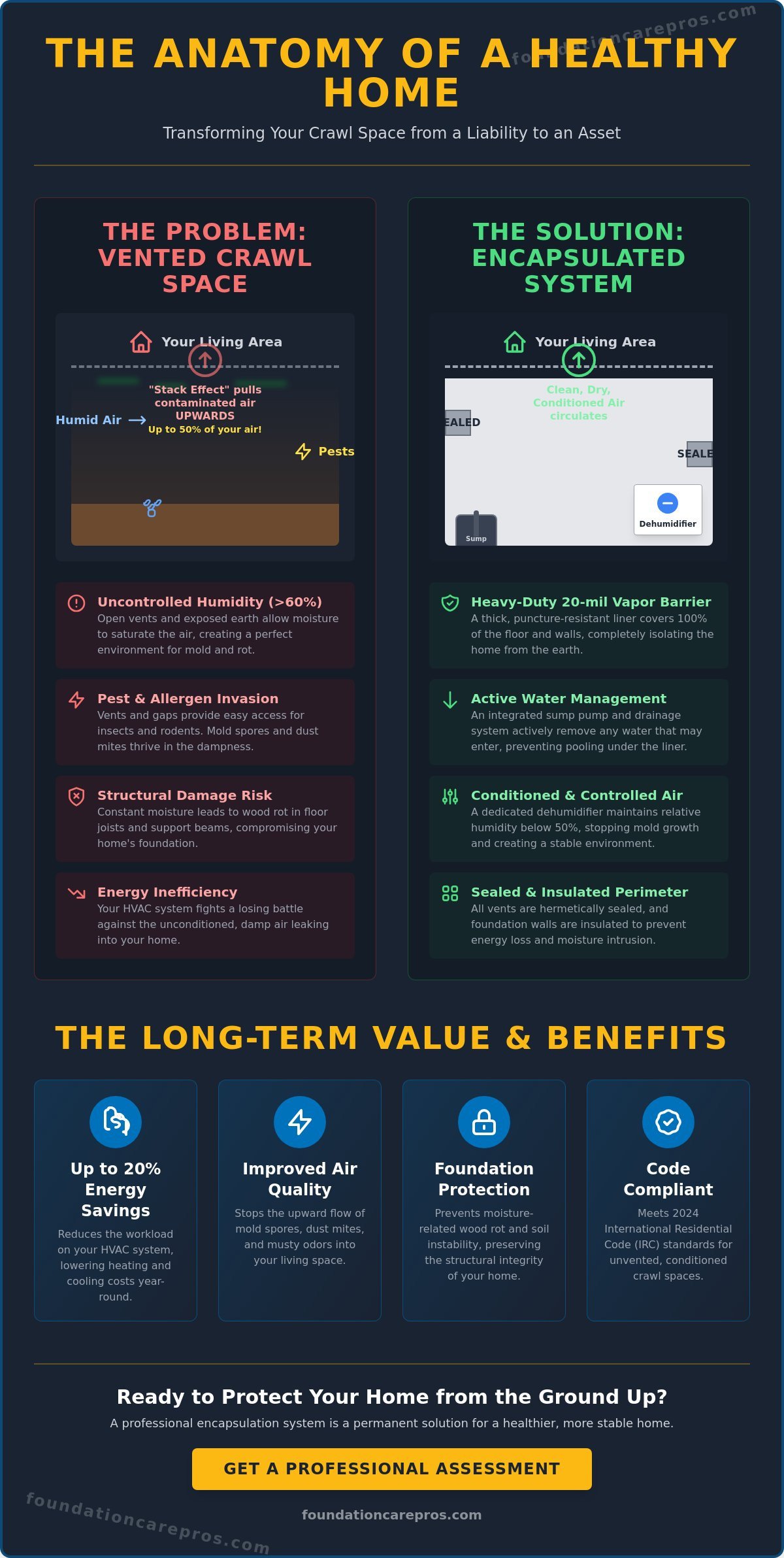
Your home functions like a chimney through a process known as the stack effect. As warm air rises and escapes through the upper levels and roof, it creates a vacuum in the lower portions of the structure. This vacuum pulls air upward from the crawl space into your living areas. If that air is damp and contaminated, it carries mold spores and allergens directly into your breathing zone. Bottom-up home health begins with managing this airflow. Encapsulation stops this upward migration of poor-quality air, ensuring that the foundation of your home’s air supply remains clean and dry.
Encapsulation vs. Vapor Barriers: Understanding the Difference
Many homeowners confuse a standard vapor barrier with full crawl space encapsulation. A typical vapor barrier is a thin plastic sheet that only covers the ground. It doesn’t stop air infiltration through vents or moisture seepage through foundation walls. Professional encapsulation is a far more rigorous standard. It requires sealing all foundation vents and installing high-grade insulation on the perimeter walls. A complete encapsulation system includes:
- High-grade protection: A heavy-duty 20-mil vapor retarder on the floor.
- Wall sealing: Mechanically fastened and insulated foundation walls.
- Vent closure: Airtight covers for all exterior vents to block humid air.
- Pier wrapping: Moisture-proof wrapping for all support columns.
We utilize materials with a 20-mil thickness to ensure long-term durability against tears and punctures. This heavy-duty barrier is taped at all seams, creating a permanent shield that a loose-laid ground cover simply cannot provide. This methodical approach ensures your foundation remains stable and your indoor air remains healthy.
The Essential Components of a Professional Encapsulation System
Success in professional crawl space encapsulation depends on the integration of three distinct pillars: a moisture barrier, active water management, and air conditioning. Installing a liner without addressing ground water is a recipe for failure. Standing water trapped beneath a liner creates hydrostatic pressure and structural instability over time. For the system to protect your foundation, these components must function as a single, unified shield. This systemic approach ensures that the wood framing remains dry and the foundation remains stable through every season.
High-Performance Vapor Barriers and Sealing
High-performance liners are the first line of defense. These are not standard plastic sheets found at hardware stores. Professional-grade vapor barrier basement crawl space materials include antimicrobial additives to prevent fungal growth on the liner surface. We mechanically fasten these liners to the foundation walls and seal them at least six inches above the ground level. Every seam is overlapped by six inches and sealed with specialized waterproof tape. This meticulous sealing ensures an airtight finish that meets the 2024 International Residential Code standards for unvented spaces.
Active Water Management: Sump Pumps and Drainage
Water management is the engine of the system. If your crawl space is prone to seepage, we install interior drainage lines to collect and direct water before it can pool. This water flows to a sump basin for immediate removal. Homeowners should know when to replace a sump pump to avoid mechanical failure during heavy storms. Reliability is paramount. We recommend battery backup systems to keep the pump running during power outages, ensuring your crawl space remains dry regardless of weather conditions.
Conditioning the Air with Dehumidification
The final pillar is dehumidification. A dedicated crawl space dehumidifier is non-negotiable for maintaining the 50 percent humidity target. Commercial-grade units are designed specifically for low-clearance areas and high-volume moisture removal. Unlike standard household units, these systems drain automatically into the sump basin or a dedicated drain line. This eliminates the need for manual maintenance and prevents moisture spikes that lead to wood rot. A professional assessment of your crawl space encapsulation needs can identify the right combination of these components for your specific property.
Encapsulation vs. Vented Crawl Spaces: Why Modern Standards Evolved
Historical building codes once mandated foundation vents under the assumption that cross-ventilation would dry out the sub-floor area. This logic failed to account for the laws of physics. In practice, these vents allow millions of gallons of water vapor to enter the home’s foundation every year. Modern building science has shifted toward sealed systems because they provide a permanent solution to moisture-related decay. The transition from vented to unvented spaces is now a standard recommendation from the EPA and the 2024 International Residential Code (IRC).
Professional crawl space encapsulation addresses the root cause of structural instability by removing the entry points for external air. The IRC Section R408.3 now provides clear requirements for unvented crawl spaces, emphasizing that a sealed environment is superior for moisture control. This isn’t just a trend; it’s a fundamental change in how we protect residential structures. By following these updated standards, we ensure that your foundation remains a dry, stable asset rather than a liability.
The Myth of the ‘Breathing’ Crawl Space
Many homeowners believe their crawl space needs to “breathe” to stay healthy. This is a dangerous misconception. When warm, humid air enters the relatively cool environment of a crawl space, it reaches its dew point. This triggers immediate condensation. Water droplets form on wooden floor joists, metal pipes, and fiberglass insulation. This constant moisture creates an ideal environment for wood-destroying fungi and rot. A vented crawl space doesn’t breathe; it collects water. Sealing the space stops this condensation cycle and prevents the structural decay that often follows.
Energy Efficiency and HVAC Performance
An open crawl space acts like a thermal hole in your home’s envelope. During summer, your air conditioner must work harder to combat the humidity and heat rising from below. In winter, freezing air cools the floorboards, making your heating system significantly less effective. Sealing this area creates a stable thermal buffer that protects your living space. Homeowners who invest in crawl space encapsulation typically see a 15% to 20% reduction in their energy bills. This improvement comes from stabilizing the environment and reducing the load on your mechanical systems.
Beyond the direct utility savings, encapsulation protects the HVAC equipment itself. Units located in the crawl space don’t have to operate in a high-humidity environment, which can extend their service life and reduce repair costs. You’ll notice a more comfortable living area and the total elimination of cold floors during the winter months. This shift toward a sealed system is an investment in both your home’s efficiency and its long-term structural health.
The Professional Installation Process: What Homeowners Should Expect
Professional crawl space encapsulation is a methodical sequence of diagnostic and technical steps. It begins with a thorough assessment of the existing environment to ensure the structure can support a sealed system. Skipping this phase leads to trapped moisture and accelerated decay. Our process prioritizes the long-term health of your home through meticulous site preparation and precise mechanical execution. This is not a superficial fix; it’s a structural upgrade that requires accuracy and discipline.
Preparation involves more than just clearing the area. We remove all organic debris, sharp rocks, and old insulation that could puncture the new liner. The soil is leveled to ensure proper drainage toward the sump basin. This creates a uniform surface for the vapor barrier, preventing low spots where water could collect. This methodical approach ensures that every component of the system functions at peak efficiency for the life of the home.
Phase 1: Inspection and Structural Remediation
Before any materials are installed, we verify the integrity of the floor joists and support structures. If wood rot or fungal growth is present, it must be treated or replaced. Sealing a crawl space with active mold or structural failure only hides the problem. We also identify any active plumbing leaks. A dry environment is a prerequisite for a successful installation. This phase ensures that the foundation is stable and the air quality will remain high once the system is active. We take a “health-first” approach to ensure the structure is sound before the seal is finalized.
Phase 2: Liner Installation and Mechanical Sealing
The installation creates a continuous, airtight barrier often referred to as the “bathtub” effect. We overlap all liner seams by six inches and secure them with industrial-grade tape. A critical step in professional installation is the termite inspection gap. Building codes require a small portion of the foundation wall to remain visible so inspectors can detect pest activity. We maintain this gap while ensuring the rest of the wall is fully insulated and sealed. This balance between moisture protection and pest management is vital for long-term safety.
We finish the process by sealing all foundation vents with airtight covers and insulating the rim joists. Every plumbing penetration and support pier is wrapped and sealed to prevent air infiltration. This comprehensive seal transforms the space into a clean, dry area that protects your property value. If you’re ready to secure your foundation, you can schedule a professional crawl space encapsulation assessment to begin the diagnostic phase.
Evaluating the Value: Is Crawl Space Encapsulation Worth the Investment?
Determining the value of crawl space encapsulation requires looking beyond the initial installation. It’s a strategic move to preserve your home’s equity and structural soundness. When you leave a crawl space exposed to the elements, you’re essentially allowing the foundation to age prematurely. A dry environment prevents the catastrophic costs associated with major foundation repairs and wood rot remediation. This proactive approach ensures that your property remains a secure asset for decades. It’s not just about moisture; it’s about the permanence of your home’s structural skeleton.
The financial return is measurable through both energy efficiency and maintenance avoidance. Homeowners often report energy savings between 15 and 20 percent once the HVAC system no longer has to compete with outdoor humidity. In many regions, these utility savings allow the system to pay for itself within five to ten years. This reduction in moisture also stabilizes the soil around your foundation. Drastic changes in soil moisture can cause shifting and settling, which often requires expensive foundation stabilization cost investments in pier systems to correct. You’re also eliminating the risk of pest infestations that thrive in damp, dark environments.
Preventing Structural Damage and Wood Rot
High humidity weakens the cellular structure of wood floor joists over time. When wood moisture content stays high, the fibers lose their load-bearing capacity. This leads to sagging floors and cracked drywall in the rooms above. The cost of sistering joists or installing I-Beam wall braces to correct structural failure far exceeds the cost of preventative sealing. You can read more about the technical details of whether encapsulation is worth it compared to these reactive repairs. Prevention is always more cost-effective than structural reconstruction.
Marketability and Home Value
A clean, encapsulated crawl space is a powerful asset during a home sale. Most buyers and home inspectors view a damp, dirt-floor crawl space as a significant liability. Mold growth and musty odors are common deal-breaker issues that can stall a closing or force expensive concessions. An encapsulated space demonstrates that the homeowner has taken a methodical approach to property care. It provides immediate proof of a dry, healthy environment that protects the entire structure. Secure your home’s foundation and its future market value with a professional assessment of your crawl space today.
Secure Your Home’s Future with Structural Protection
Protecting your property requires moving beyond temporary fixes and addressing the root causes of moisture. You now understand how a sealed environment prevents wood rot, improves air quality, and stabilizes the entire foundation. This methodical approach ensures your home meets modern building standards while providing measurable energy savings. By isolating the structure from the damp earth, you create a permanent barrier against the elements and protect your property’s long-term equity.
Investing in crawl space encapsulation is a disciplined choice for your home’s longevity. Foundation Care Pros is a locally owned and operated structural specialist and a member of the Supportworks Network. We focus on expert moisture control and foundation stabilization through evidence-based methods. Our team identifies specific vulnerabilities in your crawl space to provide a validated, high-performance solution. Schedule your professional crawl space inspection with Foundation Care Pros today. We are ready to help you secure your home’s structural integrity and ensure a healthy living environment for years to come.
Frequently Asked Questions
How long does crawl space encapsulation last?
A professional crawl space encapsulation system typically lasts 20 years or more with minimal maintenance. We use high-performance 20-mil liners that are engineered for long-term durability and resistance to punctures. Regular inspections of your sump pump and dehumidifier ensure the system continues to function as a permanent moisture barrier. This longevity makes it a reliable solution for protecting your home’s structural integrity over the decades.
Will encapsulation stop my floors from sagging?
Encapsulation prevents future sagging by stopping the wood rot that weakens floor joists. It does not, however, lift or level floors that have already settled. If your floors are currently uneven, you may require foundation pier systems or I-Beam wall braces to restore structural stability. Encapsulation serves as the final preventative measure that keeps your support structures dry and strong after those repairs are completed.
Does crawl space encapsulation increase home value?
Professional crawl space encapsulation often increases a home’s market value by eliminating common inspection deal-breakers like mold and structural decay. Prospective buyers value the improved indoor air quality and the verified energy efficiency of a sealed foundation. It transforms a dark, humid liability into a clean, dry asset that validates the overall health of the property. This investment often yields a high return during the resale process.
Is a dehumidifier always necessary with encapsulation?
A dehumidifier is essential in most climates to maintain the target relative humidity below 50 percent. Even with a high-quality liner, moisture can still enter through the foundation walls or from the earth. Without active air conditioning, humidity can accumulate and lead to condensation on wooden structures. Commercial-grade units ensure the environment remains stable regardless of external weather conditions and automatically drain to prevent maintenance fatigue.
Can I encapsulate my crawl space myself?
DIY encapsulation is possible but often fails to meet the technical standards required for a permanent seal. Professional installation involves precise mechanical fastening, integrated drainage systems, and specialized sump pump installation that most homeowners cannot replicate. Improper sealing can trap moisture against the foundation, causing more harm than good. Professional diagnostics ensure every vulnerability is addressed correctly from the start to avoid expensive future repairs.
How do I know if my crawl space needs to be encapsulated?
Common signs include musty odors in living areas, high indoor humidity, or visible condensation on floor joists. You should also look for standing water, mold growth, or pest activity beneath your home. If your energy bills are rising without a clear cause, your crawl space may be allowing unconditioned air to infiltrate your HVAC system. A professional assessment can verify these issues through methodical moisture readings and structural diagnostics. Understanding the full scope of crawl space moisture control can help you identify which combination of solutions your home requires before scheduling that assessment.
Will encapsulation prevent pests and wood-destroying insects?
Sealing the crawl space significantly reduces the risk of pest infestations by removing the moisture they need to survive. Termites, carpenter ants, and cockroaches are attracted to damp, decaying wood. While encapsulation creates a physical barrier, professional installers maintain a termite inspection gap to ensure pest control specialists can still monitor for activity as required by local codes. This balance protects your home from both moisture and insects.
What is the difference between a vapor barrier and encapsulation?
A vapor barrier is a thin plastic sheet that only covers the ground, while encapsulation is a comprehensive air-management system. Encapsulation includes sealing foundation vents, insulating perimeter walls, and installing active water management tools like sump pumps. It creates a completely sealed envelope that isolates the structure from external humidity. A simple barrier only slows down ground moisture and does not address the air infiltration that causes most rot. Homeowners with both a crawl space and a basement should also explore basement waterproofing methods to ensure comprehensive moisture protection throughout the entire foundation.