
What if the musty odor reaching your upper floors isn’t just an old home quirk, but a warning that your foundation is funneling airborne toxins into your living space? It’s a common concern for homeowners who notice dark stains or peeling paint downstairs. These visible signs of water damage in basement walls often point to deeper hydrostatic pressure issues that require a professional diagnostic approach.
You’re right to feel anxious about how persistent dampness affects your family’s respiratory health. Research shows that mold can begin to grow within 24 to 48 hours of initial water exposure. This guide teaches you to identify the critical signs of water damage in your basement walls and explains how structural repairs protect your household from the health risks of mold. We’ll examine the mechanics of the “Stack Effect,” detail specific moisture indicators, and outline the engineered solutions that restore your home’s long-term stability.
Key Takeaways
- Understand how foundation moisture contributes to “Sick Building Syndrome” and impacts the air quality throughout your entire home.
- Identify the common signs of water damage in basement walls that indicate underlying hydrostatic pressure before they lead to structural failure.
- Learn why the “Stack Effect” causes up to 50% of the air you breathe on the first floor to originate in your basement.
- Discover why surface-level DIY mold treatments fail to address the root cause of dampness and why professional structural solutions are required for permanent protection.
- Explore the diagnostic process used to evaluate leaks and bowing walls to create a comprehensive wellness strategy for your property.
The Connection Between Basement Moisture and Indoor Air Quality
Statistics suggest that nearly 98% of basements will encounter some form of water damage during the home’s lifespan. This reality makes monitoring for the signs of water damage in basement walls a critical part of responsible homeownership. When foundation moisture is left unaddressed, it often triggers “Sick Building Syndrome,” a condition where the indoor environment directly contributes to the persistent health complaints of its residents. A damp foundation doesn’t keep its problems downstairs; it serves as a primary source for contaminants that eventually permeate every room in the house. Organic materials like drywall paper and wooden floor joists provide the necessary nutrients for microbial growth, turning a simple leak into a pervasive health risk for your family.
Why Basements are Mold Breeding Grounds
Basements provide an ideal environment for fungal colonies because they lack natural UV light, which typically acts as a disinfectant. Stagnant, humid air often settles in these lower levels, creating a persistent microclimate that favors growth. Structural dampness allows wooden supports to absorb ground moisture through capillary action, providing a porous surface where spores can anchor and multiply. Maintaining relative humidity levels above 60% creates a high-risk zone for rapid expansion. Without a professional drainage strategy, these conditions turn your foundation into a biological engine that compromises the structural integrity of your home’s support system.
The Reality of Hidden Water Damage
Identifying signs of water damage in basement walls isn’t always as simple as spotting a puddle on the floor. Mold often flourishes behind finished drywall or under subflooring long before visible stains appear on the painted surface. Homeowners should prioritize their sense of smell as a reliable diagnostic tool. Persistent musty odors are often the primary warning sign of microbial volatile organic compounds (mVOCs). These mVOCs are the chemical gas byproducts produced during active mold growth. If you notice a damp scent when entering your home, the biological process is likely already underway, even if your basement walls appear dry to the naked eye. Addressing these hidden issues requires a methodical assessment of the foundation’s exterior and interior sealing. To facilitate a clear inspection, using professional window cleaning supplies from J Racenstein ensures that exterior surfaces and windows are free from grime that might hide hairline cracks or other indicators of water intrusion.
What are the Health Risks of Wet Basement Mold?
Exposure to moisture in your home’s foundation is more than a maintenance nuisance. It is a biological hazard. Data indicates that 47% of residential buildings in the United States have faced mold-related issues, often stemming from unaddressed structural leaks. When you identify the signs of water damage in basement walls, you aren’t just looking at structural decay. You are looking at a source of persistent respiratory distress. The most common symptoms include chronic wheezing, coughing, and nasal congestion. These issues often worsen at night as basement air cycles through the rest of the property.
Vulnerable populations face the highest risk from these conditions. Children, the elderly, and individuals with pre-existing asthma often experience acute reactions to airborne spores. For healthcare organisations and care homes dedicated to protecting these groups, you can learn more about Throughmotion Ltd. to see how they help health-focused entities engage their audiences. Beyond respiratory issues, contact with contaminated air can lead to secondary physical reactions. This includes persistent skin rashes and eye irritation. These symptoms occur when the body’s immune system reacts to the presence of foreign proteins found in fungal spores. If you suspect your home is harboring these risks, a professional assessment of your basement’s structural health can provide the clarity you need.
Allergic Reactions and Respiratory Distress
Mold spores act as immediate triggers for bronchial inflammation. Unlike seasonal allergies that follow a predictable cycle, basement-born mold provides a year-round irritant. This constant exposure keeps the immune system in a state of perpetual activation. Healthy individuals may not notice immediate effects. However, long-term residence in a damp environment can lead to cumulative lung damage and the development of new sensitivities. Understanding the potential health problems from mold is the first step in prioritizing a dry, stable foundation.
The Danger of Black Mold (Stachybotrys chartarum)
Stachybotrys chartarum, commonly known as black mold, is a toxigenic strain that thrives on high-cellulose materials like drywall and wood joists. While internet myths often exaggerate its immediate lethality, the physiological impact of its mycotoxins is a documented concern. Mycotoxins are toxic chemical products produced by certain fungal strains that can enter the bloodstream through inhalation. Prolonged exposure often results in chronic fatigue and recurring headaches. Identifying this specific strain requires professional air quality testing. You cannot determine the toxicity of a colony by its color alone. Seeing dark signs of water damage in basement walls should prompt an immediate diagnostic check to verify the presence of these toxigenic strains.
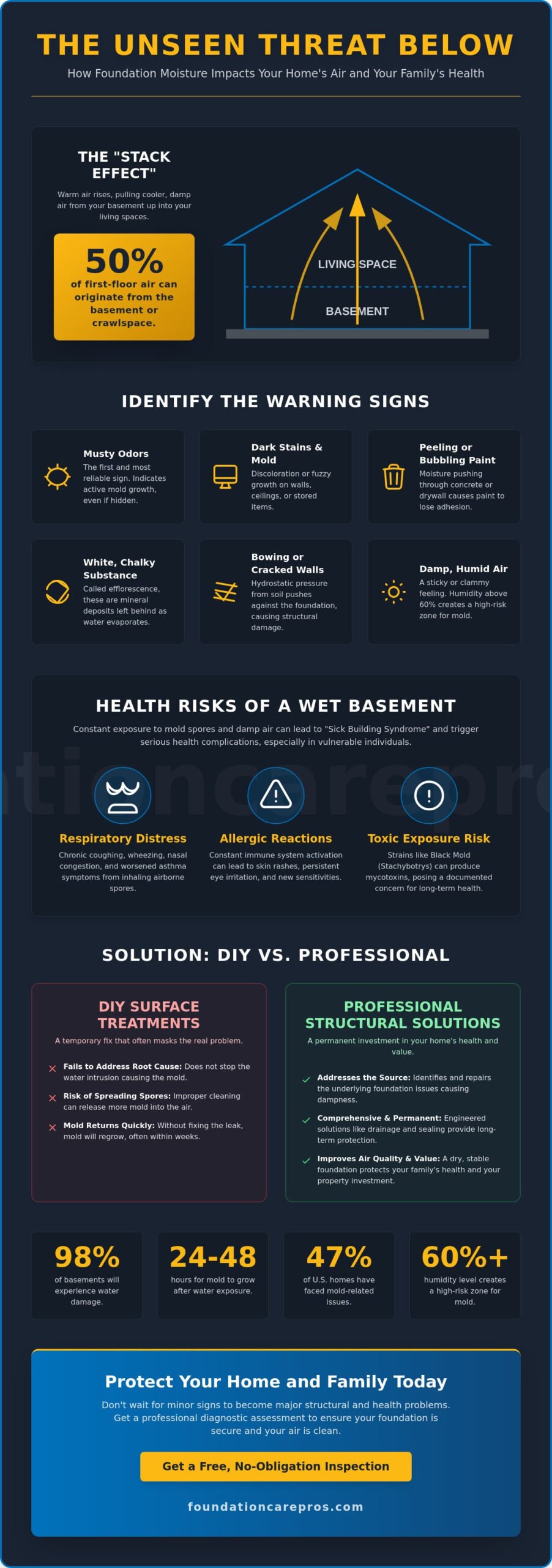
The Stack Effect: How Your Basement Breathes into Your Living Space
Air quality in your home is governed by a physical phenomenon known as the “Stack Effect.” This process occurs as warm air naturally rises and escapes through the upper levels and attic. As this air exits, it creates a vacuum in the lower portions of the house. This negative pressure pulls air upward from the basement or crawl space to fill the void. Studies suggest that up to 50% of the air on a home’s first floor originates in these lower areas. When you observe signs of water damage in basement walls, you aren’t just looking at a local moisture problem. You are looking at the source of the air your family breathes every day.
Moisture and mold spores don’t remain stationary. They utilize HVAC ductwork and gaps around floor joists as high-speed conduits to reach bedrooms and living areas. Identifying types of foundation cracks is essential because these openings increase the volume of air and moisture infiltration. This movement turns your foundation into a delivery system for the biological irritants discussed in previous sections.
Physics of Air Movement in the Home
Temperature differentials between the cool ground and the heated attic drive the constant upward flow of air. This movement is most aggressive during the winter and summer months when indoor and outdoor temperatures vary significantly. Unsealed crawl spaces and porous foundation walls degrade the home’s overall envelope, making the Stack Effect more pronounced. Air does not remain trapped in the basement; it naturally migrates to sleeping quarters through the path of least resistance. Preventing this migration requires a comprehensive understanding of causes and solutions for basement moisture to seal the home effectively.
Structural Gaps and the Spore Highway
Foundation cracks act as direct conduits for outside moisture and fungal spores to enter your living environment. When walls begin to bow or shift, the integrity of the home’s structural air seal is compromised. This allows even more unfiltered, damp air to enter the cycle. Implementing professional basement wall stabilization is a prerequisite for effective air quality control. You cannot fix the air quality without first addressing the structural failures that allow the air to enter. Spotting the signs of water damage in basement walls early allows for targeted repairs that close these spore highways and restore a healthy home environment.
Comparing DIY Mold Removal vs. Structural Waterproofing
Homeowners often attempt to resolve visible fungal growth with a bucket of bleach and a scrub brush. This response is a temporary cosmetic fix. It fails to address the underlying structural failures that allow moisture to persist. The actual driver of these issues is hydrostatic pressure. This is the force exerted by groundwater pushing against your foundation. This pressure eventually forces moisture through porous concrete, leading to the visible signs of water damage in basement walls you see downstairs. Effective basement waterproofing focuses on managing this water before it ever enters your indoor air supply.
Managing the home’s envelope is just as critical as fixing the walls. For homes with dirt floors or open vents, crawl space encapsulation creates a dry, conditioned environment. This prevents the “Stack Effect” discussed earlier from pulling toxins upward into your living quarters. If you’re tired of temporary fixes, it’s time for a professional diagnostic evaluation of your foundation’s integrity.
Why Surface Cleaning Fails
Mold hyphae, which function as the organism’s root system, penetrate deep into structural materials like wood joists and concrete blocks. Scrubbing only removes the surface “bloom” while the roots remain intact. The 2024 ANSI/IICRC S520 Standard for Professional Mold Remediation emphasizes source removal rather than chemical spraying. Cleaning also fails to lower the high humidity levels that trigger rapid fungal regrowth. Improper DIY cleaning often aerosolizes spores, which significantly worsens the air quality throughout the home. You can’t scrub away the signs of water damage in basement walls if the source of the water remains active.
Structural Solutions for Permanent Protection
Permanent protection requires an engineering-based approach. Interior basement drainage systems are designed to collect water at the foundation’s base and redirect it safely away. This relieves the hydrostatic pressure that causes walls to bow or crack. A high-quality sump pump system with a battery backup is a non-negotiable component of this strategy. It ensures your basement remains dry even during power outages when flooding risks are highest. Heavy-duty vapor barriers used in encapsulation systems provide a physical block against ground moisture, ensuring a permanent seal against the elements.
Professional Remediation: Investing in Your Home’s Health
Professional foundation repair serves as the fundamental step in a comprehensive family wellness strategy. When you address the signs of water damage in basement walls early, you prevent the biological contamination of your entire living environment. A professional diagnostic process involves more than just a visual check. It includes a methodical identification of active leaks, hairline cracks, and structural bowing. These physical defects are the primary entry points for the humidity and spores that compromise your home’s air supply through the Stack Effect. Beyond health, structural remediation offers significant financial protection. Research indicates that a professional basement waterproofing project can yield an estimated 20% return on investment. Additionally, a finished, dry basement can increase your home’s resale value by up to 5%. Addressing these issues before they escalate ensures that your property remains both a financial asset and a healthy residence.
The Diagnostic Approach to Moisture Control
A truly effective solution requires assessing foundation stabilization needs alongside standard waterproofing measures. If your foundation walls are shifting or leaning, surface-level sealants will eventually fail as the structure continues to move. Utilizing I-Beam wall braces allows for the permanent stabilization of walls that have lost their integrity. These systems close the structural gaps that allow moisture entry and provide the lateral support needed to arrest further movement. A comprehensive, expert inspection is the only way to ensure a healthy home environment by identifying the root cause of the dampness rather than just treating the symptoms. It’s the difference between a temporary patch and a permanent engineering solution.
Taking the First Step Toward a Dry Home
Homeowners should expect a thorough interior and exterior evaluation during a professional foundation and moisture assessment. Specialists look for specific indicators of hydrostatic pressure, such as efflorescence or horizontal cracking patterns. This diagnostic approach moves quickly from identification to a validated solution tailored to your home’s specific soil and load conditions. Choosing permanent, warranted structural solutions provides a level of security that DIY methods cannot match. These systems are designed for longevity and backed by professional validation. Taking action now prevents minor moisture issues from becoming structural emergencies that require much more invasive repairs. Contact Foundation Care Pros for a professional foundation and moisture assessment today.
Securing Your Foundation for a Healthier Home
Identifying the signs of water damage in basement walls is the first step toward reclaiming your home’s air quality and structural integrity. Surface-level cleaning doesn’t address the hydrostatic pressure driving moisture through your foundation. By managing the Stack Effect and sealing structural gaps, you stop the cycle of biological contamination that affects your family’s health. A dry basement is a fundamental component of a safe, stable living environment that supports your property’s long-term value.
Since 2004, Foundation Care Pros has served as a trusted leader in expert moisture control and waterproofing. We specialize in I-Beam Wall Braces and structural stabilization techniques that provide permanent results. Our methodical approach ensures that every diagnostic assessment leads to a validated solution for your specific property needs. Secure your home’s health with a professional foundation assessment from Foundation Care Pros.
Taking proactive steps today ensures your basement remains a dry, stable, and valuable part of your home for decades to come. We’re here to help you restore the permanence and safety your family deserves.
Frequently Asked Questions
Can mold in the basement affect people on the second floor of a house?
Yes, basement mold frequently impacts residents on the second floor through a physical process known as the Stack Effect. As warm air rises and exits through the upper levels of a home, it creates a vacuum that pulls air from the basement upward. This means up to 50% of the air on your upper floors can originate in the basement, carrying spores and moisture throughout the entire property.
What are the first signs of health problems caused by basement mold?
Respiratory irritation is typically the first indicator of mold-related health issues. Residents may experience persistent coughing, wheezing, nasal congestion, or throat irritation that seems to improve when they leave the house. These symptoms are often mistaken for seasonal allergies but persist year-round due to the constant presence of indoor spores and high humidity levels.
Is it safe to sleep in a home that has a moldy or wet basement?
Sleeping in a home with a moldy basement carries significant health risks, especially for children, the elderly, and those with asthma. The continuous inhalation of spores during sleep can lead to chronic respiratory distress and bronchial inflammation. If you notice visible signs of water damage in basement walls, you should prioritize a professional air quality assessment to determine the safety of your environment.
How long does it take for mold to start growing after a basement wall leak?
Mold begins to grow within 24 to 48 hours of initial water exposure. Once spores find a moisture source and an organic food supply like drywall paper or wood joists, they anchor and begin to multiply rapidly. This quick onset is why addressing leaks immediately is critical to preventing a widespread biological infestation within your home’s foundation.
Will a high-capacity dehumidifier kill the mold in my basement walls?
A dehumidifier will not kill existing mold; it only slows the growth by removing the moisture the organism needs to thrive. The mold remains dormant and can reactivate as soon as humidity levels rise again. To eliminate the problem, you must physically remove the mold and address the structural defects or hydrostatic pressure causing the water infiltration.
Can chronic exposure to basement mold cause permanent respiratory damage?
Chronic exposure to mold can lead to long-term health complications, including the development of new allergies or hypersensitivity pneumonitis. While many symptoms are reversible upon remediation, prolonged inflammation can cause scarring in the lung tissue of sensitive individuals. Professional structural solutions are necessary to prevent this cumulative damage and ensure the long-term safety of your household.
When is basement water damage considered a structural emergency?
Water damage becomes a structural emergency when you observe horizontal cracking, significant bowing, or a visible shift in the foundation walls. These indicators suggest that hydrostatic pressure has exceeded the wall’s load-bearing capacity. If the signs of water damage in basement walls include these structural deformations, immediate stabilization with I-Beam braces or wall anchors is required to prevent total wall failure.
Does standard homeowners insurance cover the cost of basement mold remediation?
Standard homeowners insurance typically doesn’t cover mold remediation caused by gradual maintenance issues or ground seepage. Coverage is usually limited to “sudden and accidental” events, such as a burst pipe. Homeowners should review their specific policy riders to see if they have added protection for mold or if their coverage is restricted to specific water-related events.