
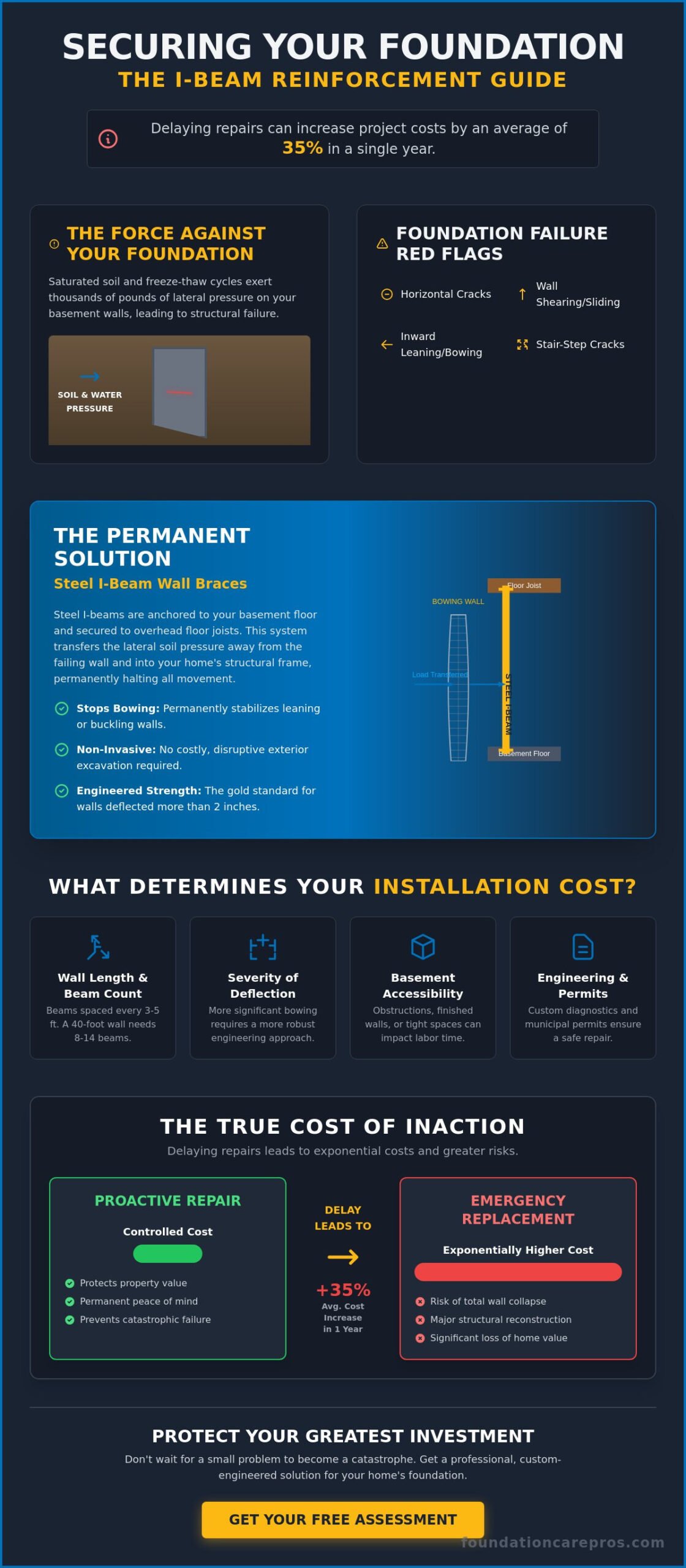
Delaying foundation repairs doesn’t just invite structural failure; it can increase your project costs by an average of 35% in a single year. You’ve likely noticed the bowing in your basement walls and felt the anxiety of a potential collapse. It’s a heavy burden to carry. Many homeowners worry about the professional cost to install i-beams in basement walls when they see foundation cracks. You want a permanent fix that protects your family and your equity. The variables involved in structural engineering can feel overwhelming when your home’s stability is at stake.
You deserve a clear, expert breakdown of how these structural reinforcements work. Steel beams are the gold standard for severe foundation issues. This guide explains the technical factors that influence your quote, from soil pressure calculations to municipal permit requirements. We’ll examine how professional installation secures your home’s market value and provides a high return on investment. By the end, you’ll have the confidence to choose a solution that offers total stability and permanent peace of mind.
Key Takeaways
- Understand how I-beam wall braces provide a permanent solution for bowed or buckling foundation walls by counteracting lateral soil pressure.
- Identify the primary variables affecting the cost to install i-beams in basement projects, including the total linear footage of the wall and the severity of structural deflection.
- Compare the structural benefits of steel reinforcement against other methods like carbon fiber straps and foundation wall anchors to find the right fit for your home.
- Learn how addressing foundation issues early prevents the high cost of emergency wall replacement and protects your long-term property value.
- See how a methodical diagnostic process ensures your structural repair is custom-engineered for your specific basement conditions.
Understanding the Investment: Why Install I-Beams in Your Basement?
I-beam wall braces serve as a permanent structural intervention for failing foundations. These vertical steel supports are engineered to counteract the immense lateral pressure exerted by the surrounding soil. By installing a heavy-duty I-beam, we stabilize bowed, leaning, or buckling walls without the need for invasive exterior excavation. This method preserves your home’s original structural footprint while stopping foundation movement in its tracks. We utilize high-strength steel systems designed for maximum durability and resistance to bending. Understanding the professional cost to install i-beams in basement walls starts with recognizing the forces working against your foundation. These systems aren’t temporary patches; they’re engineered solutions for long-term security.
Identifying Bowing Walls and Structural Pressure
Hydrostatic pressure is the primary driver of basement wall failure. When the soil around your foundation becomes saturated with water, it expands and exerts thousands of pounds of force against the masonry. This pressure often results in horizontal cracks or walls that lean inward at the top. Frost heave further complicates this by causing the ground to swell during freeze-thaw cycles, which accelerates wall deflection. If you notice these signs, your foundation has likely exceeded its structural capacity:
- Horizontal cracking along the mid-point of the wall.
- Inward leaning at the top of the foundation.
- Shearing or sliding at the base of the wall.
- Diagonal stair-step cracks in the corners.
Ignoring these warnings can lead to total wall collapse. Professional diagnostics help determine the exact amount of pressure your walls are under before catastrophic failure occurs.
The Role of Steel I-Beams in Foundation Stabilization
Stabilization relies on a mechanical transfer of force. Steel I-beams utilize a floor-to-floor bracing method to secure the wall. The bottom of the beam is anchored into the basement floor, while the top is bolted to the heavy-duty floor joists above. This configuration transfers the lateral load from the failing wall into the home’s existing structural frame. You can learn more about this specific process in our guide on how to fix a bowing basement wall. Steel is the preferred material when a wall has moved more than two inches. It provides a level of rigidity that other materials cannot match. This rigidity is vital for homes where soil pressure is constant and aggressive.
Choosing a permanent fix protects your home’s equity. While some homeowners consider temporary jacks or DIY fixes, these rarely address the root cause of the movement. A professional installation ensures that the beams are spaced correctly according to precise engineering standards. Properly spaced beams prevent the wall from bowing between the supports. This methodical approach is why homeowners prioritize the cost to install i-beams in basement settings over less reliable alternatives. You aren’t just buying steel; you’re buying a verified guarantee that your home’s foundation will remain upright and stable.
Key Factors Influencing the Cost to Install I-Beams in Basement
Predicting the final investment for foundation stabilization requires a methodical look at the structural environment. The cost to install i-beams in basement walls isn’t a fixed commodity price. Instead, it’s a reflection of the engineering demands required to secure your specific home. Several variables dictate the complexity and scale of the project, from the physical dimensions of the space to the hidden pressures within the soil. Understanding these factors helps you navigate contractor quotes with confidence and clarity.
Wall Length and Number of Beams Required
Engineering standards dictate the density of your reinforcement system. For most residential foundations, professional installers place I-beams every 3 to 5 feet along the failing wall. This spacing ensures the lateral load is distributed evenly across the entire structure. If you have a 40-foot wall that is bowing, you’ll likely require between 8 and 14 beams for a safe installation. Cutting corners here is dangerous. Installing too few beams creates localized pressure points, which can lead to the wall failing or bulging between the supports. Total wall length is the most significant scaler for material costs and labor hours.
Basement Accessibility and Obstructions
The physical layout of your basement influences the total labor required for a successful installation. In an unfinished space, the foundation walls are exposed and ready for work. However, finished basements introduce additional steps. Crews must carefully remove drywall, insulation, and framing to access the masonry. Obstructions like electrical panels, HVAC ductwork, or gas lines often require relocation before the steel can be secured. Custom cutting steel to match your specific ceiling height and joist configuration ensures a precise fit. These preparatory tasks are essential for a permanent fix but do add to the project’s timeline.
Soil conditions also play a critical role in the diagnostic process. Expansive clay soils exert significantly higher pressure than sandy soils, especially during heavy rain. If your home sits on high-plasticity clay, your structural plan may require heavier steel or tighter beam spacing to counteract the increased load. The degree of wall deflection matters too. Walls with severe bowing often require more intensive preparation and anchoring than those with minor movement. To get a precise understanding of your home’s needs, you should request a professional foundation assessment from a qualified specialist. This step ensures your structural solution is tailored to the exact pressures facing your foundation.
Comparing I-Beams to Other Wall Stabilization Methods
Selecting the right stabilization method requires balancing structural needs with environmental constraints. While steel remains the industry standard for severe movement, other technologies like carbon fiber or wall anchors have specific applications. The cost to install i-beams in basement walls reflects their status as a high-capacity solution for advanced structural failure. Choosing the wrong method for the sake of a lower upfront price often leads to secondary repairs when the initial fix fails to hold the load. We evaluate the degree of wall movement and the surrounding site conditions to determine which engineered system will provide a permanent result.
I-Beams vs. Carbon Fiber Straps
Carbon fiber straps offer a low-profile alternative for walls with minor deflection. We typically recommend carbon fiber for early-stage cracking where the wall has bowed less than two inches. These straps bond directly to the masonry and provide high tensile strength. However, they cannot straighten a wall or provide the same lateral resistance as steel. I-beams are necessary when the masonry has shifted significantly. Unlike static straps, professional steel systems can sometimes be tightened over time to provide ongoing tension against the soil. This mechanical advantage makes steel the only viable choice for severely compromised foundations.
I-Beams vs. Foundation Wall Anchors
Foundation wall anchors rely on the stable soil deep in your yard to pull the wall outward. This method requires digging a small hole roughly 10 to 15 feet away from your foundation to set an “earth anchor.” A steel rod then connects the interior wall plate to this exterior anchor. While effective, anchors aren’t always possible. Property lines, underground utilities, or expensive landscaping can block access to the necessary yard space. I-beams are installed entirely from the interior. This makes them the superior choice for homes on small lots or those with attached decks and patios where exterior excavation is impossible.
Immediate stabilization is a key advantage of steel. Once we secure the beams to the floor and joists, the wall is instantly reinforced against further movement. When comparing the cost to install i-beams in basement projects to the labor-intensive excavation required for anchors, steel often provides a better cost-to-strength ratio. It delivers the highest level of shear resistance per dollar spent on materials. This efficiency makes I-beams the most reliable option for homeowners facing aggressive wall movement or restricted exterior access. You gain peace of mind knowing the structural reinforcement is not dependent on shifting exterior soil conditions.
The True Cost of Inaction: Repair vs. Wall Replacement
Ignoring foundation movement is a high-risk financial gamble. While the initial cost to install i-beams in basement walls may seem like a significant outlay, it is a fraction of the expense required for a total rebuild. Foundation failure is a progressive condition. It does not stabilize on its own. As lateral pressure continues to mount, the structural integrity of the entire home is compromised. Waiting for a better time often results in emergency costs that far exceed planned stabilization. A 2023 study found that homeowners who delay foundation repairs see project costs increase by an average of 35% within just one year.
Preventing Total Foundation Wall Failure
Bowed walls follow a predictable path of deterioration. What begins as a hairline fracture eventually leads to significant inward leaning and, ultimately, structural shearing. Structural shearing is the point where the wall separates from the footer. Once a wall reaches this stage, I-beam reinforcement is no longer a simple preventative measure; it becomes an essential rescue operation. I-Beam Wall Braces stop the clock on movement immediately. They provide the necessary resistance to freeze the wall in its current position. This prevents the need for temporary shoring, emergency excavation, or full wall reconstruction.
Long-Term ROI and Home Resale Value
Foundation health is a primary concern for lenders and buyers alike. Unresolved structural issues can reduce a home’s market value by 10% to 15% or more. On a $300,000 home, this represents a potential loss of up to $45,000. In a real estate transaction, mandatory disclosure laws require you to report these defects. This often leads to failed inspections or denied mortgage approvals for potential buyers. Investing in a professional repair restores your home’s marketability and protects your equity.
A certified repair using steel I-beams often comes with a transferable warranty. This document is a powerful asset during a sale because it provides the next owner with a sense of permanence and security. When you evaluate the foundation stabilization cost, you must view it as an equity protection plan. It’s also important to note that most standard homeowner insurance policies do not cover gradual foundation failure caused by soil pressure. You’re responsible for the maintenance of your home’s structural footprint. Taking action now prevents a manageable repair from turning into a catastrophic financial loss. If you’re concerned about the stability of your walls, schedule a structural evaluation today to protect your investment.
Professional Installation with Foundation Care Pros
Precision is the foundation of every structural repair we perform. We approach each basement as a unique engineering challenge rather than a standard commodity project. Our technicians utilize a methodical diagnostic process to determine the exact state of your foundation walls before any steel is moved into place. We use precision tools to measure wall deflection and identify the specific patterns of lateral pressure affecting your home. This data-driven approach ensures that the reinforcement system we design is custom-engineered for your soil conditions and wall height. We don’t believe in a one-size-fits-all strategy when the stability of your home is at stake.
Our Methodical Diagnostic and Installation Process
Success in foundation stabilization depends on a sequence of expert assessments and professional execution. Our process follows three critical steps to ensure your home is permanently secured:
- Step 1: Diagnostic Assessment. We measure current wall deflection and identify the root cause of soil saturation around your home. Understanding why the pressure exists is as important as reinforcing the wall itself.
- Step 2: Custom Fabrication. Every basement has different ceiling heights and joist configurations. We provide precision fitting of steel beams to your specific floor joists. This ensures a tight, professional fit that maximizes load distribution.
- Step 3: System Tensioning. Once the beams are secured, we tension the system to provide immediate structural support. This stops further inward movement and stabilizes the masonry against the external soil load.
Transparency is a core value of our service. We provide a clear breakdown of the i-beam wall braces installation process and the associated costs. Our quotes are direct and functional, reflecting the high-quality galvanized steel components we source through our Supportworks connection. These industry-leading materials are designed for maximum durability and resistance to the damp environment of a basement. You will understand every variable that influences the total cost to install i-beams in basement walls before the work begins.
Why Professional Engineering Matters
Structural repair is not a project for DIY enthusiasts or general handymen. Improperly placed steel or the use of un-engineered ‘jack-posts’ can cause more harm than good. If a beam isn’t anchored correctly, the lateral pressure from the wall can be transferred into your upper-floor framing, leading to buckled joists or cracked drywall in your living spaces. We ensure that the load is properly transferred to the home’s structural frame without causing secondary damage. Our principled specialists focus on accuracy and long-term results to give you unwavering stability. Ready to stabilize your home? Schedule a professional foundation inspection today to secure your home’s future.
Secure Your Home’s Structural Future
A stable foundation is the most critical component of your property’s long-term value and safety. We’ve explored how I-beam wall braces provide a permanent mechanical solution to the relentless lateral pressure of saturated soil. Choosing an engineered steel system prevents the catastrophic costs of wall collapse and restores your home’s marketability. While the professional cost to install i-beams in basement walls depends on specific site variables; the investment delivers an immediate return in structural integrity and peace of mind. You don’t have to wait for a foundation failure to take control of your home’s health.
As a locally owned and operated structural expert and a proud Supportworks Network Member, we specialize in permanent I-Beam Wall Braces. Our team utilizes precision diagnostics to ensure your foundation is stabilized for the life of the structure. Get a Professional Foundation Stabilization Quote from Foundation Care Pros today to protect your largest investment. You can stop foundation movement and regain confidence in your home’s safety with a verified, expert solution.
Frequently Asked Questions
How many I-beams do I need for a 20-foot basement wall?
Standard engineering spacing requires one beam every 3 to 5 feet along the affected wall. For a 20-foot span, you should expect to install 4 to 6 beams depending on the severity of the lateral pressure. This density ensures the load is distributed evenly without creating weak points. A structural specialist will determine the exact placement based on your home’s unique load-bearing requirements.
Will I-beams take up a lot of space in my finished basement?
Steel beams protrude roughly 4 to 6 inches from the foundation wall. While they are visible in an unfinished space, you can easily conceal them during a basement remodel. Many homeowners build a furred-out wall using 2×6 framing to hide the steel. This allows you to maintain a clean, finished look while benefiting from permanent structural stabilization that doesn’t compromise your living area.
Can I-beams actually straighten my bowing wall over time?
Certain high-tension I-beam systems can gradually straighten a wall over time. By applying torque to the tension bolts during dry seasons, we can sometimes nudge the masonry back toward its original position. The primary goal of the installation is to stop further movement immediately. Complete straightening depends on the age of the foundation and the degree of existing deflection before the repair begins.
Is it cheaper to use carbon fiber than steel I-beams?
Carbon fiber straps often have a lower material price, but they are not a direct substitute for steel. Carbon fiber is only effective for walls with less than two inches of bowing. If your wall has significant movement, the cost to install i-beams in basement walls provides better long-term value. Steel offers the necessary rigidity to handle aggressive soil pressure that would overwhelm lighter materials.
How long does it take to install a full I-beam system?
Most residential I-beam installations are completed within one to two days. The timeline depends on the number of beams required and the accessibility of your basement. Unfinished spaces move quickly, while finished basements require extra time for wall demolition and utility relocation. Our crews work methodically to ensure the system is tensioned and secured correctly before the project is finalized.
Does foundation repair with I-beams come with a warranty?
Professional structural repairs typically include a transferable warranty that protects the home’s future marketability. This warranty guarantees that the wall will not bow or tilt further inward. Because I-beams provide a permanent mechanical fix, these warranties often stay with the property. This documentation is vital for maintaining buyer confidence and securing mortgage approvals during a future home sale.
Will installing I-beams stop water from leaking into my basement?
Steel beams address structural stability, not moisture management. While they stop the wall from moving, they do not seal out groundwater or hydrostatic pressure leaks. If you have standing water or damp walls, you should combine structural bracing with an interior basement drainage system or a sump pump. Addressing the water source is essential for preventing further soil expansion and pressure.
Do I need a structural engineer’s report before getting a quote?
A structural engineer’s report is highly recommended and often required by local building codes for structural alterations. The engineer provides an unbiased assessment of the wall’s failure and specifies the exact beam size and spacing needed. This report ensures that the cost to install i-beams in basement projects results in a safe, code-compliant repair. We use these specifications to execute a precision installation.