
Did you know that up to 50% of the air you breathe on your home’s first floor originates in the dark, damp environment beneath your feet? When you’re facing musty odors and fluctuating energy bills, it’s natural to wonder: is crawl space encapsulation worth it? You’ve likely heard conflicting advice about whether to keep vents open or seal them shut. It’s frustrating to feel like you’re guessing when the structural integrity of your home is on the line.
We understand that you want a dry, odor-free environment and lower monthly utility costs without being upsold on a simple plastic liner. This guide breaks down the structural, financial, and health-related realities of crawl space encapsulation to determine if it’s the right investment for your property. We’ll examine 2026 building standards and energy efficiency data to show you how a managed environment protects your home value. You’ll get a clear look at the diagnostic process that transforms a damp crawl space into a permanent, dry asset.
Key Takeaways
- Define encapsulation as a comprehensive moisture management system rather than a simple plastic floor covering.
- Understand how the “Stack Effect” draws humid air into your home and why traditional venting often fails.
- Evaluate energy savings and asset protection to determine is crawl space encapsulation worth it for your specific property.
- Learn to identify the specific red flag symptoms that indicate your home’s structural integrity is currently at risk.
- Discover the professional standards required for a permanent seal, including the use of heavy-duty antimicrobial liners.
Beyond the Vapor Barrier: What is Crawl Space Encapsulation?
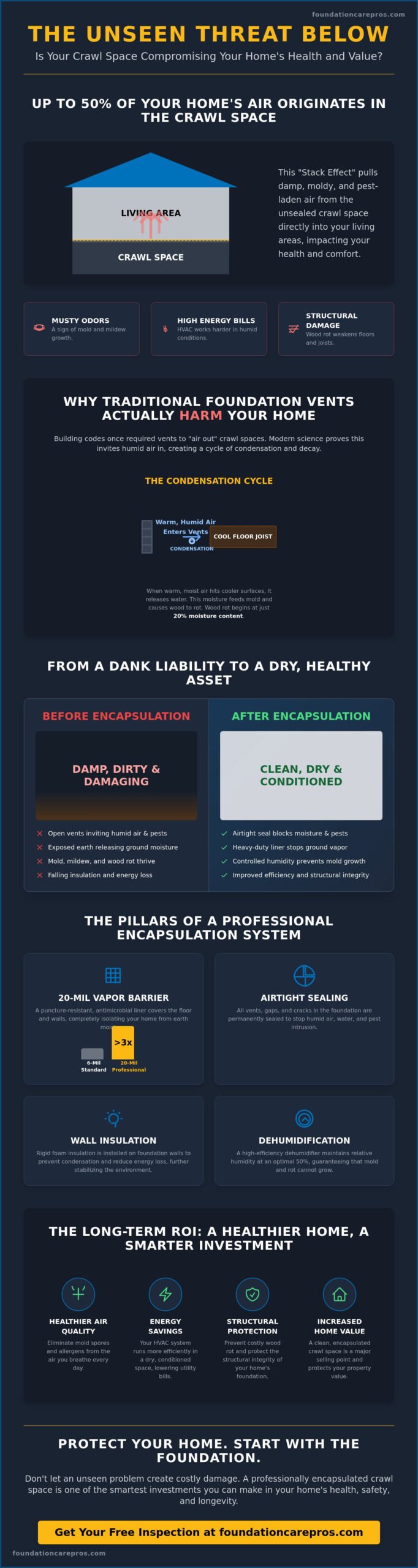
Encapsulation is a comprehensive moisture management system designed to isolate your home’s foundation from the earth and outdoor elements. Many homeowners ask, is crawl space encapsulation worth it, when they first notice damp insulation or smell mildew. The answer lies in the transition from a traditional open-vent strategy to a conditioned environment. Historically, builders added vents to a Crawl space to encourage airflow. Modern building science proves these vents actually invite humid air inside, which leads to condensation on wooden floor joists. Encapsulation replaces this failed method by creating a sealed envelope that mimics the climate-controlled conditions of your living area.
The Components of a Professional System
A high-performance system relies on three technical pillars. First, we install heavy-duty, reinforced 20-mil vapor barriers. These are significantly more durable than the standard 6-mil plastic sheets typically found in hardware stores. Second, the system requires airtight sealing of all vents and rim joists. We also install thermal insulation on the foundation walls to prevent temperature spikes and condensation. Finally, mechanical dehumidification is essential. High-capacity, low-temperature dehumidifiers work to maintain a consistent 50% relative humidity level. This prevents the environment from reaching the dew point where mold thrives and wood rot begins.
Vapor Barrier vs. Full Encapsulation
Understanding the difference between these two terms is critical for long-term property protection. A vapor barrier for basement and crawl space serves as the foundational layer. It covers the exposed earth to block ground moisture from evaporating into your home. However, a barrier alone is often insufficient in high-humidity climates. While it stops moisture from the soil, it does nothing to address the humid air entering through open vents.
Full encapsulation takes the process further by sealing the entire envelope. This involves wrapping the walls and piers, sealing every seam with specialized tape, and managing the air quality mechanically. When you are determining is crawl space encapsulation worth it, consider that you are investing in a permanent climate-controlled zone. This is a structural upgrade that transforms an uncontrolled crawl space into a managed asset. A simple barrier is a localized moisture retarder, but crawl space encapsulation is a total environmental solution.
The Science of the Stack Effect: Why Traditional Venting Fails
Your home functions like a large chimney. Warm air naturally rises and escapes through the attic and upper levels. This movement creates a vacuum effect in the lower parts of the structure. As air leaves the top, it must be replaced by air from the bottom. This physical process is known as the “Stack Effect.” It forces a continuous stream of unconditioned air from the crawl space directly into your living areas. When you ask if crawl space encapsulation worth it, you must consider the physics of how your home breathes. Without a seal, you are essentially breathing the air from a damp, dark hole beneath your floorboards.
Traditional building codes once required vents to encourage airflow. Modern building science has proven this logic flawed. During humid months, open vents allow moisture-laden air to enter the cool environment of your foundation. When this warm, wet air hits cool floor joists or copper pipes, it reaches its saturation point. Water droplets form immediately. This condensation creates a breeding ground for wood-destroying organisms. Instead of “drying out” the space, vents act as a constant supply line for atmospheric moisture. Sealing these openings stops the cycle of condensation and protects the structural wood from seasonal damage.
The impact extends to your mechanical systems. Most HVAC ductwork resides in the crawl space. When these ducts are surrounded by humid air, they work significantly harder to maintain indoor comfort. Damp air is physically more difficult to cool than dry air. This puts unnecessary strain on your air conditioner and shortens the lifespan of your equipment. Implementing crawl space encapsulation transforms this area into a conditioned zone, allowing your HVAC system to operate in a stable, dry environment.
Psychrometrics and Dew Point in the Crawl Space
Dew point is the specific temperature at which air can no longer hold water vapor. In an unsealed crawl space, the surface temperature of floor joists often falls below the outdoor dew point. This causes the wood to “sweat” as moisture transitions from a gas to a liquid. Wood rot begins at 20% moisture content in lumber. Once the wood fibers reach this threshold, fungal growth is inevitable. Maintaining a managed environment through encapsulation keeps surfaces dry and prevents the structural degradation of your home’s skeleton.
Indoor Air Quality (IAQ) Implications
You cannot separate the air in your crawl space from the air in your kitchen or bedroom. Industry professionals follow the “50% rule,” which states that up to half of the air on your first floor originates in the foundation. This air carries microscopic contaminants, including mold spores and dust mite feces. It also provides a path for subterranean gases like radon to enter your home. Is crawl space encapsulation worth it for your health? Sealing the earth with a heavy-duty liner creates a permanent barrier against these airborne threats, ensuring the air you breathe is filtered and safe.
Evaluating the ROI: Is the Investment Truly Worth It?
Financial returns on home improvements often feel subjective, but the data behind foundation sealing is concrete. When homeowners ask is crawl space encapsulation worth it, they’re usually looking for a timeline for recouping their capital. Based on current energy efficiency data, most property owners see the initial investment pay for itself within 5 to 10 years through utility savings alone. This transition from an uncontrolled environment to a managed asset provides immediate monthly relief and long-term structural security.
Energy bill reductions typically range from 15% to 20% after a professional encapsulation. This happens because your HVAC system no longer struggles to strip moisture from the air pulled in by the stack effect. Dry air is significantly easier and cheaper to cool than humid air. By reducing the humidity load, you also extend the operational lifespan of your furnace and air conditioner. Avoiding a premature $10,000 HVAC replacement is a direct, though often overlooked, part of the ROI calculation. Furthermore, a dry environment prevents the need for “sistering” floor joists, a costly structural repair required when wood rot compromises the home’s skeleton.
Impact on Property Resale and Appraisals
Home inspectors are trained to identify the “red flags” of a damp foundation. A vented, humid crawl space often leads to a laundry list of repairs during a real estate transaction. In contrast, an encapsulated space signals to both inspectors and buyers that the home has been meticulously maintained. Providing a transferable warranty on the encapsulation system can be a decisive selling point. It’s important to remember that structural issues discovered during a home inspection often cost double to resolve under the pressure of a closing deadline. Proactive sealing eliminates this financial risk entirely.
Long-Term Structural Preservation
Moisture control is directly linked to the stability of your foundation. Excess water in the soil causes expansion and contraction cycles that lead to various types of foundation cracks. By managing the environment under the home, you ensure that the soil remains at a consistent moisture level, which prevents differential settlement. This preventative approach is far more cost-effective than later installing foundation pier systems or wall anchors. Additionally, the cost of professional mold remediation can frequently exceed the price of the encapsulation itself. Investing in a permanent seal is crawl space encapsulation worth it because it replaces reactive, expensive repairs with a one-time, validated solution.
Diagnostic Checklist: Signs Your Crawl Space Requires Sealing
Determining is crawl space encapsulation worth it begins with a methodical inspection of your home’s current performance. You don’t need to be a structural engineer to spot the early warning signs of foundation distress. Passive moisture barriers, such as thin, loose plastic sheets, often degrade or shift over time. This leaves the raw earth exposed to the air. When this happens, your home exhibits specific red flag symptoms that suggest the environment beneath your feet is no longer under control. Identifying these issues early can prevent the need for expensive structural repairs like I-beam wall braces or foundation pier systems.
Visual and Sensory Indicators
Cupping or crowning of hardwood floors on the first level is a primary indicator of high humidity. As moisture rises from the crawl space, the bottom of the floorboards expands faster than the top. This causes the wood to warp or “cup” along the edges. You should also check for condensation on fiberglass insulation. These hanging batts act like sponges, trapping water directly against your wooden floor joists and inviting wood rot. Look for efflorescence on the foundation walls. These white, chalky salt deposits are left behind when water evaporates from the concrete. Their presence proves that water is migrating through the masonry and entering your home’s envelope.
The “Musty Smell” Test
The distinct “basement smell” in your living area is the result of microbial volatile organic compounds (mVOCs). These gases are produced by active fungal growth and mold colonization. Odors typically intensify after heavy rain or during high-humidity months when the stack effect is most active. Ignoring these scents is a mistake. It indicates that the air you’re breathing is contaminated with biological pollutants. Because up to 50% of your indoor air comes from the foundation, these smells are a direct link to the health of your crawl space environment.
A damp foundation also creates a sanctuary for wood-destroying insects and rodents. Termites require a consistent moisture source to survive, and wet insulation provides a perfect nesting ground for mice and rats. Professional moisture mapping is an essential part of a structural assessment. Specialists use precision hygrometers to measure relative humidity and moisture meters to check the saturation of your floor joists. This data-driven approach removes the guesswork from foundation care. If your home shows these signs, professional crawl space encapsulation is the validated solution to restore your home’s integrity and determine is crawl space encapsulation worth it for your long-term security.
Professional Execution: The Foundation Care Pros Standards
The effectiveness of a moisture management system depends entirely on the meticulousness of the seal. A partial encapsulation or a loose-fitting liner won’t stop the stack effect or prevent wood rot. When evaluating is crawl space encapsulation worth it, you must consider the quality of the installation. We approach every project with a methodical diagnostic mindset to ensure the foundation remains a controlled environment. Our standards prioritize a permanent bond between the structure and the moisture management system to provide unwavering stability.
Comprehensive protection often requires more than just a liner. In many cases, we integrate Sump Pump Installation and interior drainage systems to manage active water intrusion. This ensures that ground water is captured and removed before it can ever touch your foundation walls or support piers. By combining mechanical drainage with a sealed envelope, we transform a high-risk area into a dry, structural asset. We use specific antimicrobial liners that won’t support mold growth, ensuring the air quality in your home remains safe for decades.
The Installation Process
Precision begins with preparation. We perform thorough debris removal and grading to ensure proper drainage flow toward the collection points. This prevents water from pooling under the liner, which is a common failure point in amateur installations. Our team seals every vent, rim joist, and pipe penetration using professional-grade expanding foam to eliminate air bypass. We don’t rely on tape alone. We mechanically fasten the liner to the foundation walls to create a permanent, structural-grade bond that won’t peel or sag over time.
Why Settling for DIY Often Fails
Many property owners attempt to install consumer-grade plastic to save on initial costs. However, achieving an airtight seal around complex support piers and plumbing stacks is nearly impossible without specialized training and industrial materials. DIY kits often use thin 6-mil or 10-mil plastic that tears easily during routine maintenance or inspections. Furthermore, consumer-grade dehumidifiers lack the capacity to manage the heavy humidity loads found in unconditioned foundations. They often burn out within a few seasons of continuous use.
Professional systems utilize industrial-grade equipment designed for high-performance, low-temperature operation. This equipment is essential for maintaining the 50% relative humidity required to prevent fungal growth. When you choose professional execution, you receive the value of verification and long-term structural warranties. These documents are vital for maintaining your home’s resale value and proving the integrity of the work to future buyers. It’s the only way to ensure is crawl space encapsulation worth it for the life of your home. Schedule a professional crawl space assessment with Foundation Care Pros to begin your home’s diagnostic evaluation.
Securing Your Home’s Structural Future
Deciding is crawl space encapsulation worth it comes down to choosing between reactive repairs and proactive preservation. You’ve seen how the stack effect pulls damp, contaminated air into your living spaces and how traditional vents often accelerate wood rot. A professional encapsulation system replaces these vulnerabilities with a controlled, conditioned environment. This transformation protects your home’s skeleton while reducing monthly utility costs by up to 20%.
As a Supportworks Network Member, we specialize in high-performance solutions like 20-mil reinforced liners and comprehensive moisture diagnostics. We don’t just cover the dirt; we seal the entire envelope to ensure your foundation remains stable and dry for decades. This methodical approach eliminates the musty smell and prevents the need for future structural interventions like wall braces or pier systems. You deserve the confidence that comes with a validated, permanent solution for your property.
Take the first step toward a healthier, more efficient home. Get a Professional Crawl Space Evaluation Today and let our specialists provide the technical clarity you need to protect your investment. Your home’s long-term integrity is our priority.
Frequently Asked Questions
How long does crawl space encapsulation typically last?
A professional encapsulation system using heavy-duty, 20-mil reinforced liners can last 20 years or longer. The durability of the system depends on the quality of the mechanical fasteners and the maintenance of the environment. While the liner itself is permanent, mechanical components like dehumidifiers typically have a lifespan of 10 to 15 years. Regular inspections ensure the seal remains airtight and the structural wood stays dry.
Will encapsulation increase the value of my home?
Encapsulation increases home value by protecting the structural skeleton and improving indoor air quality. Real estate professionals often find that a dry, conditioned foundation prevents the red flags that trigger price reductions during home inspections. Potential buyers view a professional system as a sign of meticulous property care. It also provides a competitive edge in humid markets where damp foundations are a common concern.
Does crawl space encapsulation require regular maintenance?
Regular maintenance is necessary to ensure the system continues to perform at peak efficiency. You should inspect the dehumidifier filter every six months and verify that the condensate pump is discharging water correctly. It’s also wise to check the perimeter seal for any signs of detachment or physical damage. Maintaining the mechanical components is the only way to ensure the answer to is crawl space encapsulation worth it remains a positive one over time.
Can I encapsulate my crawl space if it already has standing water?
You must manage standing water through an interior drainage system before the encapsulation process begins. Installing a liner over active water intrusion will trap moisture and lead to hydrostatic pressure issues. We integrate sump pumps and drainage channels to collect and remove ground water. Understanding how often to replace sump pump systems is critical to ensuring this mechanical defense remains reliable long after your encapsulation is complete. This ensures the soil beneath the liner remains stable and the air above the liner stays dry.
What is the difference between a vapor barrier and encapsulation?
A vapor barrier is a localized solution that only covers the exposed earth on the floor. Encapsulation is a comprehensive environmental seal that covers the floor, wraps the foundation walls, and seals all outdoor vents. While a barrier slows ground moisture, only encapsulation creates a conditioned space that mimics the indoor environment. This total seal is the standard for modern moisture management.
Is a dehumidifier always necessary with encapsulation?
A high-capacity dehumidifier is almost always necessary to maintain a healthy environment. Even with a perfect seal, temperature fluctuations can cause the remaining air to reach its dew point. A dehumidifier works to keep relative humidity below 50%, which is the threshold for mold growth. Without mechanical air management, moisture can still accumulate and threaten the structural integrity of your floor joists.
How much can I expect to save on my energy bills?
Homeowners typically save between 15% and 20% on their monthly heating and cooling costs. These savings occur because your HVAC system no longer has to work overtime to remove humidity from the air pulled in by the stack effect. Over a 5 to 10 year period, these utility reductions can often recoup the initial investment. This financial benefit is a key reason why is crawl space encapsulation worth it for most property owners.
Does encapsulation prevent pests and termites?
Sealing the foundation creates a hostile environment for termites, rodents, and other wood-destroying pests. Most insects and vermin require a high-moisture environment to thrive and navigate. By removing damp insulation and standing water, you eliminate the primary attractants for these pests. A dry, sealed crawl space serves as a permanent physical and environmental barrier against subterranean infestations.