
Most homeowners view structural work as a chaotic demolition project, but a professional foundation repair process is actually a disciplined sequence of precision engineering. It’s natural to feel anxious when you notice new wall cracks or sticking doors. You’re likely worried about property destruction and whether a repair will truly stand the test of time.
We understand that your home’s stability is non-negotiable. This guide provides a clear roadmap of what happens during a professional intervention. You’ll learn how experts use advanced diagnostics to identify failure points before moving to technical solutions like foundation pier systems or carbon fiber straps. We focus on transparency so you can see the logic behind every structural adjustment.
By the end of this article, you’ll have a complete understanding of the project timeline and the verification steps required to ensure long-term safety. We’ll show you how modern methods prioritize structural permanence without the unnecessary mess you might fear. You deserve a stabilized home and the confidence that comes with a proven technical solution.
Key Takeaways
- Identify the root cause of structural failure through professional diagnostic inspections that look beyond surface-level cracks.
- Navigate the foundation repair process with confidence by understanding how stabilization systems like piers and anchors transfer weight to stable soil.
- Reduce anxiety over property damage by learning how technicians use targeted excavation and site protection to preserve your landscaping.
- Ensure a permanent solution by following the verification steps, including load testing and proper soil compaction, that guarantee long-term stability.
- Select a qualified partner by focusing on specialists who offer engineered solutions and comprehensive moisture management.
The Foundation Repair Process Begins with Professional Diagnostics
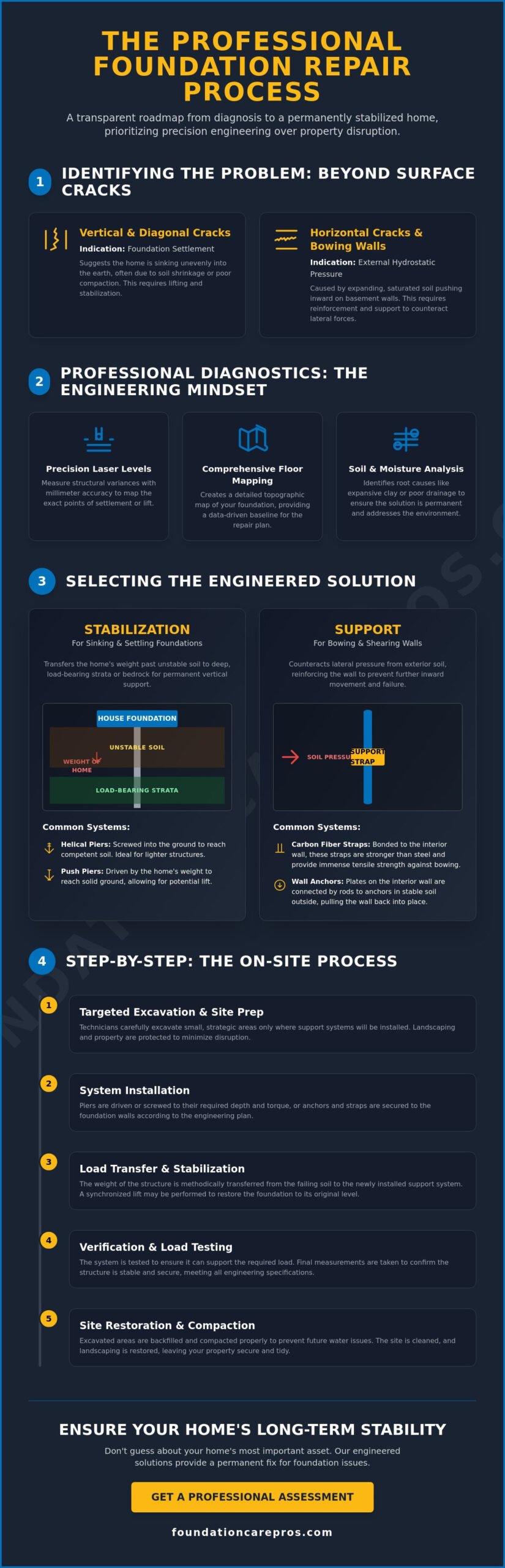
Structural restoration requires an engineering mindset rather than a general construction approach. The foundation repair process is a systematic sequence designed to stabilize or lift a sinking or shifting structure. It begins with a rigorous diagnostic phase. Specialists use high-precision laser levels and comprehensive floor mapping to identify structural variances that the naked eye cannot see. This data provides a baseline for the entire project. It ensures that every pier or anchor is placed with mathematical certainty. We don’t guess where a home is sinking; we measure it.
Diagnostics must go beyond the foundation walls to look at the environment surrounding the home. Identifying the root cause is the only way to ensure a permanent fix. Common triggers include soil shrinkage during dry seasons or intense hydrostatic pressure from saturated ground. This data guides every decision made during the foundation repair process, ensuring the solution addresses the environment as much as the structure. A professional plan addresses these underlying soil issues alongside the visible symptoms. This dual-focus approach prevents the home from shifting again once the initial repairs are complete.
Identifying Different Types of Foundation Damage
Understanding the specific nature of structural movement is the first step toward resolution. You must be able to differentiate between minor cosmetic settlement and genuine structural failures. Knowing the types of foundation cracks and what they mean is essential for choosing the correct repair method. For instance, vertical cracks usually suggest your home is settling into the earth. Conversely, horizontal cracks often signal that your walls are bowing inward due to external pressure — and if you’re wondering is a horizontal foundation crack serious, the answer is almost always yes, as these fractures indicate your wall is actively losing its fight against lateral soil pressure. Each symptom requires a different technical solution, ranging from carbon fiber straps to foundation wall anchors. Recognizing these signs early prevents a localized issue from becoming a total structural failure.
The Role of Soil Analysis in Repair Planning
Soil composition dictates the success of any structural intervention. Engineers must evaluate whether your home sits on expansive clay or granular soils. Different types of building foundations react differently to these conditions. We measure moisture levels to determine the risk of future soil movement and use that data to calculate the required depth for pier systems. Reaching stable, load-bearing strata is the only way to bypass the active zone of shifting surface soil. This level of analysis ensures that the support systems installed today will remain effective for decades. Accuracy in the planning phase is what transforms a temporary patch into a permanent structural solution.
Selecting the Engineering Solution: Stabilization vs. Support
Selecting the right engineering solution is the pivot point of the foundation repair process. Every home faces unique environmental stressors. We categorize these solutions into two primary objectives: stabilization and support. Stabilization transfers the structure’s weight to competent load-bearing strata deep underground. This is essential when a home is sinking. Support systems focus on counteracting lateral pressure from expanding exterior soil. This is the priority when basement walls begin to bow or shear.
Engineered systems provide a permanent, non-invasive alternative to total foundation replacement. Replacing a foundation is a massive undertaking that involves lifting the entire house and pouring new concrete. In contrast, modern technical solutions target the specific failure point. This precision saves time and prevents the destruction of your property. Choosing the right method depends entirely on whether the foundation is sinking, bowing, or shearing.
Foundation Piering Systems for Sinking Homes
Piering systems address vertical settlement. Helical piers are high-strength steel shafts with screw-like plates. Technicians mechanically screw them into the ground until they reach stable soil layers or bedrock. They don’t rely on the weight of the building during installation. This makes them ideal for lighter structures or areas with specific soil requirements.
Push piers operate differently. They use the home’s own weight as leverage to drive steel sections into the earth. Once these piers reach a solid foundation, they can stabilize the home or even lift it back to its original position. Statistics from 2026 indicate that settlement repairs account for approximately 36% of the total industry revenue. This highlights how common this issue is for homeowners across the country.
Wall Stabilization for Bowing Basement Walls
Bowing walls require lateral reinforcement rather than vertical support. A common solution is i-beam wall braces installation. These steel beams are secured to the floor and the joists above. They arrest wall movement immediately. This method is highly effective for walls with significant inward curvature.
Carbon fiber straps offer a low-profile alternative. Technicians bond these high-tensile strength straps directly to the wall. They are virtually invisible once painted but provide immense structural reinforcement. If the soil outside is pushing too hard, foundation wall anchors are used. These anchors use exterior soil tension to pull walls back toward a straight position over time. The wall repair segment is the fastest-growing service type in 2026. This trend reflects an increased homeowner awareness of structural wall issues. If you notice signs of shifting, it’s wise to consult with a structural specialist before the damage progresses.
Step-by-Step: What to Expect During the Physical Repair
The physical execution of the foundation repair process begins with meticulous site preparation. Technicians prioritize the protection of your property before any machinery arrives. Crews clear the work area and use protective coverings, such as plywood or heavy plastic sheeting, to shield your landscaping and flower beds. This proactive approach ensures that the repair remains focused on the structure without causing unnecessary damage to your home’s exterior or interior environment.
Excavation is a surgical procedure rather than a total demolition. Unlike general construction, structural repair requires digging only at specific points where Foundation Pier Systems or Foundation Wall Anchors must be installed. These access holes are typically small and strategically placed to minimize soil disruption. Once the access points are ready, the installation of hardware begins using specialized, high-torque machinery or manual bracing techniques designed for precision in confined spaces.
Stabilization or lifting is the most critical phase of the foundation repair process. Technicians perform this step slowly and methodically. Moving the structure too quickly can result in secondary damage, such as new drywall cracks or binding windows. By using hydraulic jacks and monitoring the structure in real-time, the team ensures the home reaches its engineered specifications safely. Final adjustments are made to secure the hardware, ensuring the load is permanently transferred to the new support system.
The Installation of Structural Hardware
Installing structural hardware requires technical precision and verified measurements. When driving Foundation Pier Systems, technicians monitor the “torque” or depth to ensure each pier reaches load-bearing strata capable of supporting the home’s weight. For basement walls, securing I-Beam Wall Braces involves anchoring the steel to the floor joists and the basement slab to arrest movement. If the plan calls for Foundation Wall Anchors, the process involves tensioning the rods to provide immediate structural relief and pull the wall toward its original position over time.
Managing the Worksite and Homeowner Disruption
Minimizing disruption is a hallmark of a professional structural project. Technicians use dust-containment systems and low-vibration equipment to keep the interior of your home clean and quiet. Specialized, compact machinery allows for efficient repairs even in tight crawl spaces or finished basements where traditional equipment cannot fit. While every project varies based on the scope of damage, a standard residential foundation repair typically follows a timeline of three to five days. This efficient rhythm moves the project from identification to resolution without leaving your home in a state of prolonged construction.
Verification and Site Restoration: Ensuring a Permanent Fix
Verification is the phase where engineering meets accountability. Once the hardware is in place, the foundation repair process shifts toward rigorous validation. We don’t assume the fix is permanent; we prove it through systematic load testing. This involves applying a specific amount of force to each pier to confirm it can support the calculated weight of the structure. This data-driven step ensures that the load is successfully transferred from unstable soil to the new Foundation Pier Systems. It provides the empirical evidence needed to guarantee structural integrity.
Proper backfilling and soil compaction follow the testing phase. We replace the soil in the access points and compact it in layers. This prevents future settling and eliminates the risk of water pooling near the foundation. Poor compaction is a common cause of recurring issues. We treat this with the same technical rigor as the hardware installation itself. A final walkthrough ensures all structural goals were met. We address any remaining cracks to leave the home in a secure, finished state.
Post-Repair Structural Verification
The final structural check involves recording elevation readings across the entire foundation. We compare these numbers to the initial diagnostic map to confirm the house is within acceptable engineering tolerances. Technicians also check the functionality of doors and windows to ensure the stabilization has relieved previous binding. We document the “as-built” depth of every pier for your property records. This documentation serves as a permanent verification of the work performed during the foundation repair process. It’s an essential piece of data for future property valuations and structural history. Homeowners who plan to sell should understand that this documentation is equally valuable when selling a house with foundation issues, as it demonstrates to buyers and inspectors that repairs were completed to professional engineering standards.
Landscaping and Exterior Restoration
Restoring your property’s appearance is the final step of our site protocol. We replace sod and soil to return excavated areas to their pre-repair state. Proper grading is critical here. We ensure the soil slopes away from the foundation to manage moisture effectively. Inside the home, we clean the basement or crawl space to remove all construction debris. Our goal is to leave your property as clean as we found it, with the added benefit of a stabilized home. If you want to ensure your home remains protected from future water issues, consider our Interior Basement Drainage Systems to manage hydrostatic pressure and maintain soil stability.
Choosing a Specialized Partner for Structural Integrity
Selecting a contractor is the most influential decision in the foundation repair process. You should prioritize specialists who offer engineered, warrantied systems rather than general contractors who treat structural work as an add-on service. Surface-level repairs often fail because they lack the technical depth required to stabilize a home permanently. Look for partners who utilize high-quality, galvanized steel components for every installation. These materials are specifically designed to resist the corrosive elements found in deep soil. This choice ensures the longevity of your investment and the safety of your structure.
Comprehensive care must be a standard requirement for any structural project. A principled specialist evaluates the entire structural environment instead of just the visible cracks. They provide both structural reinforcement and comprehensive moisture management. This often includes assessing the need for Interior Basement Drainage Systems or Sump Pump Installation to manage the hydrostatic pressure discussed in previous sections. You should verify that the contractor’s workflow includes a rigorous diagnostic phase and a final verification step. This ensures the technical solution is specifically calibrated to your home’s unique soil profile and engineering needs.
The Importance of Permanent Support Systems
Permanent systems provide the only viable path to long-term security. I-beam wall braces and helical piers far outlast “quick fix” solutions like concrete patches or superficial mortar work. Concrete patches are brittle; they often crack or separate as the soil continues its natural cycle of expansion and contraction. In contrast, galvanized steel systems are engineered to withstand immense lateral pressure and vertical settlement for decades. A transferable warranty is a critical asset for home resale. It provides immediate peace of mind for you and verified structural stability for future buyers. The long-term ROI of professional foundation stabilization is found in the preservation of your home’s equity and the total elimination of structural anxiety.
Why Foundation Care Pros is the Trusted Choice
Foundation Care Pros acts as a disciplined problem-solver for the local community. Our commitment to the Supportworks network of high-performance structural products ensures your home receives the best technology available. These systems undergo rigorous engineering tests to meet specific safety and performance standards. We follow a methodical foundation repair process that prioritizes accuracy, safety, and permanence above all else. Every project moves through a sequence of expert assessment and professional execution. We aren’t just contractors; we are advocates for the structural integrity of your property. Contact Foundation Care Pros today for a professional evaluation of your home’s foundation.
Secure Your Home’s Structural Future
Structural stability is the result of a precise engineering sequence. You’ve seen how the foundation repair process moves from data-driven diagnostics to the installation of permanent hardware. By choosing engineered systems like Foundation Pier Systems or I-Beam Wall Braces, you shift the focus from temporary patches to long-term reliability. Verification through load testing ensures that every adjustment meets professional standards for safety. It’s about moving from structural uncertainty to a state of total confidence.
As a member of the Supportworks Network, Foundation Care Pros specializes in high-performance structural products. We prioritize accuracy and permanence to protect your property’s equity. Don’t let structural anxiety linger when a technical solution is available. Request your professional foundation evaluation from Foundation Care Pros to begin the journey toward a stabilized home. You can restore your property’s integrity and gain the peace of mind that comes with a verified structural fix. Your home is your most significant investment; it deserves the care of a principled specialist.
Frequently Asked Questions
How long does the foundation repair process typically take?
A standard residential project typically takes three to five days to complete. The exact timeline depends on the number of Foundation Pier Systems required and the depth of the load-bearing soil strata. Most homeowners find the disruption minimal because technicians focus only on specific failure points rather than a total site demolition.
Will foundation repair damage my landscaping or interior walls?
Landscaping and interior wall damage are minimized through surgical excavation and slow lifting techniques. Technicians use protective sheeting for your yard and clear only the necessary access points for hardware installation. While minor cosmetic drywall cracks can occur during a structural lift, these are far less invasive than the destruction caused by a total foundation replacement.
Do I need to leave my home while the foundation is being repaired?
You don’t need to leave your home during the foundation repair process. The work is largely external or confined to basements and crawl spaces where technicians install I-Beam Wall Braces or carbon fiber straps. Your utilities remain functional throughout the project, and the crew maintains a clean worksite to ensure your daily routine continues without significant interruption.
What is the difference between foundation stabilization and foundation lifting?
Stabilization focuses on stopping further settlement, while lifting attempts to return the home to its original elevation. Foundation Pier Systems can achieve both objectives depending on the structural goals. Stabilization ensures the home doesn’t move further into unstable soil, whereas lifting addresses existing slope issues and functional problems like sticking doors.
Can foundation repair cracks reappear after the process is finished?
Structural cracks won’t reappear if the underlying soil issue is permanently addressed with engineered hardware. Once the home is secured with carbon fiber straps or I-Beam Wall Braces, the wall movement is arrested. Any existing cosmetic cracks should be patched only after the structure is stabilized to ensure the finish remains smooth and intact.
Is a permit required for the house foundation repair process?
Most local building departments require a permit for the house foundation repair process to ensure safety and compliance. This ensures the work meets the standards set by the International Building Code and regional requirements like the California Building Standards Code. A professional contractor typically handles the permit filing to verify that all structural adjustments meet legal engineering standards.
How do I know if the foundation repair was successful?
Success is verified through load testing and post-repair elevation readings that prove the structure is stable. Technicians use hydraulic equipment to confirm that each pier is supporting the intended weight before finalizing the project. You’ll also notice immediate functional improvements, such as doors that no longer stick and windows that open and close smoothly. If you’re planning to list your property after repairs are complete, reviewing a comprehensive strategy for selling a house with foundation issues can help you leverage your repair documentation to protect your home’s market value.