
Choosing the wrong foundation repair method can be more damaging than the settlement you are trying to correct. You’ve likely spent weeks monitoring cracks in your drywall and wondering if your home is structurally sound. When comparing helical piles vs push piers, it’s common to feel anxious about technical jargon and the high stakes of choosing a solution that might not fit your specific needs. You deserve a clear, expert assessment that prioritizes long-term stability over a quick fix.
We’ve designed this guide to eliminate the confusion and help you secure your home’s future. You will discover the technical differences between these stabilization methods and understand exactly how soil conditions dictate the right choice for your property. We will preview the 2026 engineering standards and installation requirements that ensure your foundation remains permanent. By the end of this article, you’ll have the evidence-based knowledge needed to restore your property value and stop the cycle of structural worry.
Key Takeaways
- Foundation piers restore structural integrity by transferring your home’s weight to load-bearing soil strata deep underground.
- Push piers utilize the existing weight of your structure to drive high-strength steel sections into the earth for maximum stabilization.
- Helical piles offer a versatile alternative by using a screw-like design that provides immediate load capacity verification through torque monitoring.
- Analyzing the mechanical differences between helical piles vs push piers allows you to choose a solution tailored to your property’s unique load requirements.
- A detailed engineering assessment identifies the specific soil conditions and structural factors that dictate which system provides the most reliable long-term support.
Understanding Foundation Underpinning: Helical Piles vs Push Piers
Foundation piers function as a deep foundation system. They are engineered to transfer a building’s weight past unstable surface soils down to stable, load-bearing strata or bedrock. Evaluating helical piles vs push piers involves looking at two distinct engineering solutions for the same critical problem. Both systems aim to stop active movement and facilitate a successful foundation settlement repair. These methods provide a permanent path to structural integrity that simple masonry patches cannot match.
The Core Purpose of Underpinning
Underpinning is necessary when the soil beneath your foundation fails. This failure often happens because of poorly compacted fill, shifting moisture levels, or naturally expansive clay. As the soil moves, the foundation follows. This leads to cracks, sticking doors, and uneven floors. Piering systems bypass these volatile layers. They reach depths where the soil is dense enough to support the structure’s load without further compression. This creates a stable platform that protects your home from future environmental changes.
Why a Choice Must Be Made
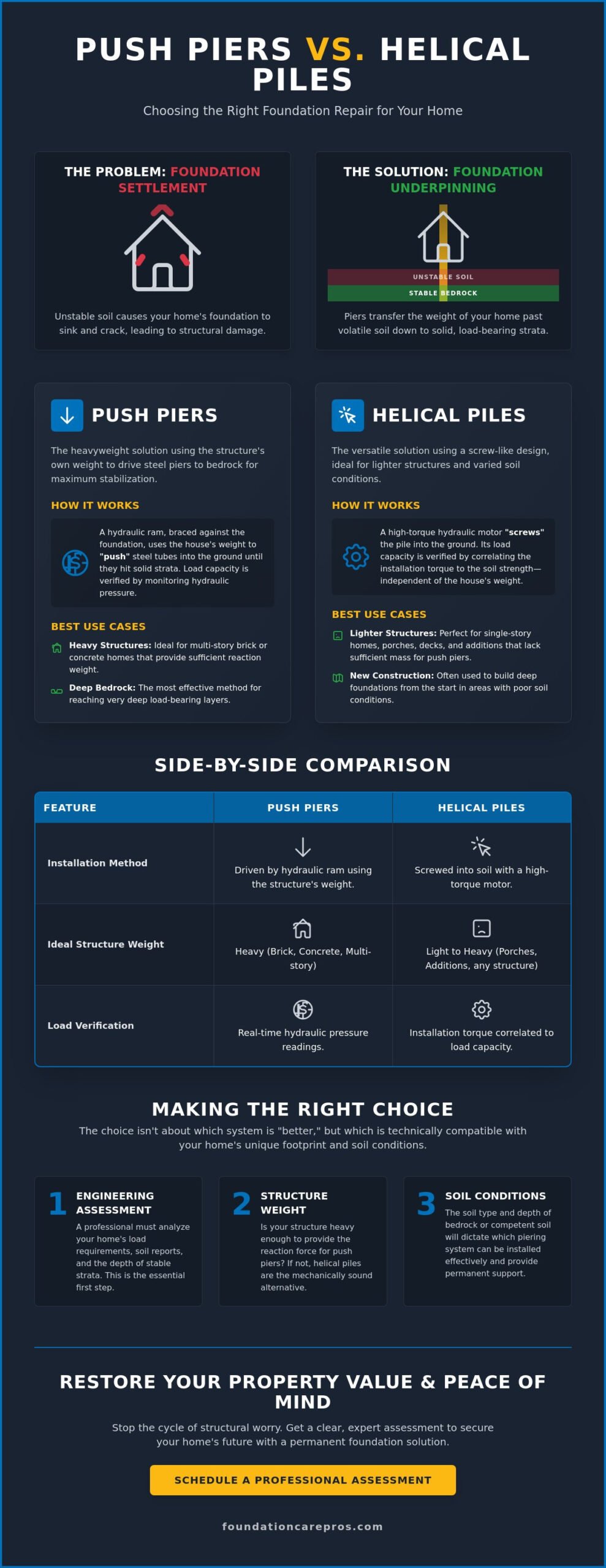
The choice between these systems depends on the specific physics of your property. Push piers rely on the existing weight of the building to provide the reaction force needed for installation. Hydraulic jacks essentially use your home as a heavy weight to drive steel sections deep into the earth. If a structure is too light, like a single-story porch or a small addition, it won’t provide enough resistance. In those cases, the pier won’t reach bedrock. Instead, the house will simply lift off the ground during the attempt.
Helical piles offer a different mechanical approach. They feature screw-like plates that allow them to be wound into the soil using high-torque hydraulic motors. This installation is independent of the building’s weight. It makes helical piles ideal for lighter structures or areas where the soil requires a specific torque-to-load ratio for verification. Engineers select the system based on soil reports, structural mass, and the depth of the stable strata. It isn’t a matter of which system is better in a vacuum. It’s about which one is technically compatible with your home’s unique footprint.
Push Piers: The Heavyweight Solution for Structural Stabilization
Push piers represent the most common choice for stabilizing heavy residential structures that have begun to sink. These systems consist of high-strength, galvanized steel sections that are driven vertically into the earth. The defining characteristic of a push pier is its reliance on the existing weight of the building. Unlike other methods, push piers use the home as a massive reaction force to drive the steel sections downward. This ensures the pier reaches a layer of soil or solid bedrock capable of supporting the structure’s tonnage without further movement.
The engineering behind this system is straightforward but incredibly effective. It’s often considered the “gold standard” for homes with heavy masonry or concrete foundations. Because the installation continues until the pier hits competent load-bearing strata, it eliminates the guesswork associated with shallower repair methods. When comparing helical piles vs push piers, the push pier is the specialist for structures that possess enough mass to withstand the hydraulic force required for deep penetration.
The Hydraulic Installation Process
Installation begins by exposing the foundation footer at specific intervals. We attach heavy-duty steel brackets directly to the footer to provide a secure, permanent lifting point. High-pressure hydraulic cylinders are then mounted to these brackets. These cylinders drive the individual steel pier sections through the bracket and deep into the soil.
This process provides an immediate, real-time load test for every pier installed. We monitor the hydraulic pressure gauges to verify that each pier has reached a depth where it can support the specific load of that portion of the wall. Once every pier hits the required resistance, the weight of the home is transferred from the failing soil onto the new steel foundation pier systems. This allows for a controlled lift of the structure back toward its original level.
Best Use Cases for Push Pier Systems
Push piers excel when dealing with massive structures that won’t budge during the jacking process. Multi-story brick homes, stone foundations, and reinforced concrete buildings provide the necessary counter-weight for a successful installation. This is a critical technical differentiator in the helical piles vs push piers debate. If a structure is too light, the hydraulic force will simply lift the house before the pier reaches stable soil.
These systems are also the preferred choice when stable soil or bedrock is exceptionally deep. Because the steel sections are added one by one, we can drive them as deep as necessary to find a permanent support layer. This is vital for properties built on expansive clay or thick layers of poorly compacted fill. If you’ve noticed significant stair-step cracks in your exterior brickwork, a professional assessment of foundation pier systems can determine if your home has the required mass for this heavyweight solution.
Helical Piles: Versatile Stability for All Structures
Helical piles provide a versatile alternative to the weight-dependent nature of push piers. They consist of a central steel shaft featuring one or more screw-like plates, known as helices, welded at specific intervals. Installation involves winding these piles into the earth using high-torque hydraulic motors, much like a screw into wood. This mechanical process allows the system to function independently of the building’s mass. Consequently, helical pier foundation systems are the primary choice for lighter structures that lack the tonnage required for push pier installation.
This system is not just about stopping settlement; it is about precision engineering. Because the installation does not rely on the structure’s weight, it can be used for a wider variety of applications than traditional push systems. Whether you are dealing with a sinking chimney or planning a new addition on unstable soil, helical piles offer a verified path to permanent stability. The ability to install these before a structure even exists makes them a proactive tool for modern construction and restoration.
The Power of Torque-Based Underpinning
Installers monitor torque levels in real-time to determine when the pile has reached sufficient load capacity. This torque-to-capacity ratio provides immediate verification that the pier can support its designated portion of the load. Because they are screwed into place, these piles produce minimal vibration during the process. This makes them exceptionally safe for fragile, historic, or adjacent structures that might be damaged by the high-pressure driving used in other methods. The helices also provide a unique advantage: they offer resistance to both downward settlement and upward soil heave, anchoring the structure firmly in place regardless of soil moisture changes.
When Helical Piles Outperform Push Piers
The debate over helical piles vs push piers often comes down to the weight of the structure being saved. Helical piles outperform when stabilizing lighter features such as decks, porches, or chimneys. These structures often move independently of the main foundation but don’t have the mass to ‘push’ a traditional pier to bedrock. They are also the superior option for new construction projects where piers are installed into the soil before the foundation is even poured. Where soil conditions are volatile, such as in areas with high water tables or ‘plastic’ clays, helical piles excel. In these environments, finding a firm ‘hard stop’ for a push pier can be difficult, but a helical pile can anchor securely into dense soil layers using the surface area of its helices.
Helical Piles vs Push Piers: Side-by-Side Comparison
The primary technical differentiator in the helical piles vs push piers debate remains the reaction force requirement. While both systems use steel to reach stable ground, the method of reaching that depth is fundamentally different. Push piers rely on the structure’s weight to drive the pier sections downward. Helical piles use mechanical torque to screw into the earth. This distinction determines which system is physically capable of stabilizing your home without causing secondary damage or an incomplete installation.
Every pier, whether helical or push, is manufactured from high-strength galvanized steel. This material choice ensures a lifespan measured in decades, protecting the steel from corrosion in wet soil. By selecting the right system, you ensure a permanent restoration of your property value. Both systems offer a significant upgrade over temporary fixes, providing a direct path to structural integrity that meets modern engineering standards.
The Decision Matrix: Weight and Soil
Professional installers use a methodical decision matrix to select the correct system. This involves analyzing the structural load against the expected depth of stable soil strata. If the engineering doesn’t align with the physics of the house, the repair will fail.
- Heavy structure + deep bedrock: Push piers are typically the most efficient choice here. They utilize the building’s mass to reach depths where solid rock provides a permanent “hard stop.”
- Light structure + variable soil: Helical piles are the safer engineering choice. They don’t risk lifting or damaging lighter components like porches or additions during the drive process.
- Unknown soil conditions: These situations often favor helical piles. The predictable torque-to-capacity ratio provides immediate, verified data on load capacity, even if bedrock is not reachable.
Engineers also consider the presence of high water tables. In these environments, helical plates provide superior resistance to both sinking and upward soil heave, keeping the foundation locked in place despite moisture fluctuations.
Speed and Site Impact
Installation logistics vary based on the equipment required for each method. Push piers often necessitate larger excavation areas to accommodate the hydraulic cylinders and the brackets attached to the footer. This process is highly effective for heavy masonry but may involve more disruption to the immediate perimeter of the home. It is a robust, industrial process that yields immediate results for heavy loads.
Helical piles offer a more surgical approach. They are often faster to install in pre-construction or light-load scenarios because they can be driven with smaller, more maneuverable equipment. This includes mini-excavators or even handheld hydraulic motors for tight-access areas. Both systems avoid the curing time and mess associated with traditional concrete underpinning. They allow for immediate loading and structural lifting. If you need a professional assessment of your home’s specific load requirements, you can review our validated foundation pier systems to see how we ensure long-term stability.
Choosing the Right System for Your Home’s Foundation
A professional inspection provides the only reliable path to a permanent foundation solution. Engineers must synthesize several data points, including site-specific soil reports and total structural weight, to make a final recommendation. In many cases, addressing settlement with piers is the prerequisite step before implementing basement wall stabilization. If the foundation base is still moving, secondary supports like wall braces or straps cannot perform their job effectively.
The technical choice of helical piles vs push piers is ultimately settled by the physics of your home. We verify local building codes for 2026 to ensure every installation meets updated depth and load requirements. These regulations have become more stringent to account for increased soil volatility and changing environmental standards. Our methodical approach ensures that the system we install today will remain stable for the life of the structure.
What to Expect During a Professional Consultation
A thorough assessment begins with a comprehensive visual inspection of the entire property. We document interior drywall cracks, exterior masonry gaps, and any separation around window frames. These symptoms provide the first clues regarding the direction and severity of the settlement. We don’t guess; we use evidence to build a diagnostic profile of your home’s health.
We then perform elevation mapping using precision laser levels. This data determines the exact points of structural failure and the degree of lift required to return the home to a level state. Finally, we review regional soil maps to predict the depth of load-bearing strata. This preparation ensures that when we arrive for installation, we have a clear understanding of the soil density and bedrock depth we’ll encounter. This level of verification is what separates a professional restoration from a temporary patch.
Securing Your Home’s Future
Delaying foundation repair is a high-risk strategy that rarely pays off. Structural issues worsen with every seasonal freeze-thaw cycle, as water enters existing cracks and expands. What starts as a minor settlement can quickly evolve into a significant failure that compromises the entire building envelope. Taking action now prevents the damage from spreading to your roof, windows, and interior finishes.
Smart homeowners compare the foundation stabilization cost against the immediate loss of home equity. A property with a documented foundation issue is often impossible to sell at market value and may even be uninsurable. Investing in a permanent piering system restores that value and provides the peace of mind that comes with a stable home. Contact Foundation Care Pros for a definitive structural assessment of your property. Our disciplined approach ensures you receive the correct engineering solution tailored specifically to your home’s needs.
Securing Your Home’s Structural Integrity
Deciding between helical piles vs push piers isn’t about finding a superior product; it’s about matching the right engineering to your home’s unique footprint. You now understand that push piers provide the heavyweight force required for massive masonry structures, while helical piles offer the precision needed for lighter additions and complex soil strata. Both systems deliver a permanent solution that protects your equity and ends the cycle of structural anxiety. These engineered supports bypass volatile surface soil to provide your foundation with the unwavering platform it requires.
We’ve provided expert structural stabilization since 2004 as a proud Supportworks Network Member. Our specialized foundation pier system installation follows a disciplined, evidence-based approach to ensure your home remains level and secure for decades to come. You don’t have to navigate technical jargon alone or settle for temporary patches that fail over time. Schedule your professional foundation stabilization assessment with Foundation Care Pros today. We’re ready to restore your confidence and provide the permanent stability your property deserves.
Frequently Asked Questions
Is it better to use helical piles or push piers for a residential home?
The choice depends entirely on your home’s construction and the soil conditions beneath it. Push piers are the preferred solution for heavy, multi-story masonry or concrete homes that provide enough weight to drive the piers to bedrock. Helical piles are more effective for lighter structures like porches, chimneys, or single-story wood-frame additions. A professional assessment of helical piles vs push piers ensures the mechanical choice aligns with your home’s specific load.
Can push piers be installed if my house is made of wood frame construction?
Push piers can be used on wood frame houses if the foundation footer and the structure’s total mass provide sufficient reaction force. However, very light wood-frame buildings may not have the weight needed to drive the pier to a load-bearing depth. In these cases, the house might lift before the pier hits its target. Helical piles are often a safer, more predictable alternative for lightweight wood-frame properties.
How deep do helical piles usually have to go to be effective?
Helical piles must reach a depth where the soil provides enough torque-based resistance to support the design load. This depth is site-specific and typically ranges between 10 and 30 feet, though they can go deeper if necessary. Installers monitor hydraulic pressure in real-time to verify the pile has reached stable strata. This verification process ensures every pier provides the required permanent support regardless of surface soil volatility.
Will installing foundation piers lift my house back to its original level?
Stabilization is the primary objective, but lifting the structure back toward its original position is often achievable. Technicians use hydraulic jacks to carefully raise the foundation once the piers are secured in load-bearing soil. Success depends on the structural condition of the house and how long it has been settling. While we aim for maximum recovery, the focus remains on ensuring the home never sinks again.
What happens if the soil is too rocky for push piers?
Rocky soil can obstruct push piers and prevent them from reaching the necessary depth. If a push pier hits a large boulder or shelf rock prematurely, it may not provide a stable long-term solution. Helical piles can sometimes navigate around smaller obstructions, but extremely rocky terrain may require specialized drilling equipment. A methodical site assessment identifies these obstacles before installation begins to prevent project delays.
Do foundation pier systems come with a permanent warranty?
Professional foundation pier systems typically include a long-term, transferable warranty that protects the homeowner’s investment. These warranties ensure the steel components and the installation itself meet engineering standards for decades. Because these piering solutions are designed for permanence, the warranty provides an essential layer of security for your property value. It’s a standard practice that reflects the reliability of modern structural stabilization methods.
How long does it take to install a typical piering system?
Most residential piering projects are completed within two to five days. The timeline depends on the number of piers required and the ease of access to the foundation. Because the equipment used for helical piles vs push piers is relatively compact, the process is efficient and causes minimal disruption to your landscaping. We provide a clear schedule before work begins so you know exactly what to expect.
Can I stay in my home during the pier installation process?
You can remain in your home throughout the entire installation process. Most of the work occurs on the exterior of the foundation, meaning interior living spaces are rarely affected. While there will be some noise from hydraulic motors and excavation equipment during the day, your daily routine can continue as usual. Our crews prioritize a clean and organized job site to minimize the impact on your property.