
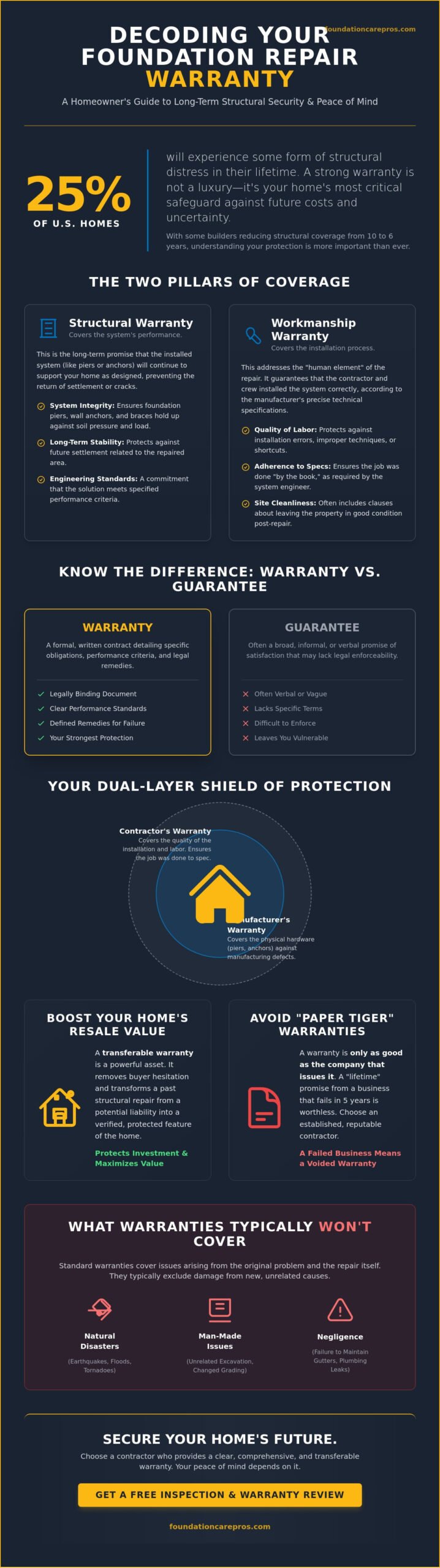
According to research from May 2026, 25% of all homes in the United States will experience some form of structural distress in their lifetime. When you’re facing these statistics, understanding foundation repair warranty details becomes your most important tool for long-term security. It’s natural to feel uneasy about technical legal language or worry that a repair might fail after the contractor has moved on. With some regional builders already reducing structural coverage from ten years down to six, you need to know exactly what your contract guarantees.
You deserve a solution that remains as stable as the structural systems supporting your home. This guide will help you decode complex warranty terms so you can protect your structural integrity and maximize your property’s resale value. We’ll examine the difference between workmanship and structural coverage, explain how to ensure your benefits are fully transferable, and outline the specific maintenance standards required to keep your protection valid for years to come. By the end of this article, you’ll have the clarity needed to choose a contractor with confidence.
Key Takeaways
- Distinguish between structural and workmanship coverage to ensure both the installation and the long-term stability of your home are protected.
- Protect your investment by understanding foundation repair warranty exclusions and why standard clauses typically omit natural disasters.
- Maximize your property’s resale value by leveraging transferable benefits that remove the stigma often associated with past structural work.
- Evaluate contractor stability to avoid “paper tiger” warranties that lose all value if a company fails to stay in business.
- Decode the technical language in your agreement to confirm your foundation pier or drainage system meets rigorous engineering standards.
Defining the Foundation Repair Warranty and Its Strategic Value
A foundation repair warranty is a formal legal commitment to the structural performance of a repair over a specific period. Within the broader home improvement industry, these documents provide the essential bridge between a technical fix and long-term financial security. For high-stakes interventions like Foundation Pier Systems or I-Beam Wall Braces, the warranty serves as a verification of engineering standards. It isn’t merely a piece of paper; it’s a documented assurance that the stabilization work will hold under the loads it was designed to carry.
Understanding foundation repair warranty language helps you distinguish a firm legal obligation from a casual promise. In the construction context, a “guarantee” is often a broad, sometimes verbal, promise of satisfaction. A “warranty” is a written contract that outlines specific performance criteria and the remedies available if those criteria aren’t met. Relying on a vague guarantee leaves you vulnerable. A structured warranty provides a clear path to resolution if the soil shifts or the hardware requires adjustment.
Property marketability depends on verified structural health. When you eventually list your home, a robust warranty maintains value by neutralizing the risk of future settlement for the buyer. It transforms a past repair from a perceived liability into a verified asset. By providing a clear record of the work and its protection, you offer the next owner the same peace of mind you enjoy today.
Why Warranty Length Isn’t the Only Metric
Warranty duration often distracts homeowners from the quality of the terms. A “Lifetime” warranty sounds impressive, yet it’s frequently filled with vague conditions that make it difficult to enforce. Conversely, a 25-year limited structural warranty with clear, actionable terms often provides superior protection because it defines exactly what’s covered. Understanding foundation repair warranty structures is about looking for specific performance benchmarks rather than just the number of years on the page. A Lifetime Warranty is a legal promise that the installed components will maintain their structural function for the duration of the building’s standing life.
The Role of Manufacturers in Your Protection
Comprehensive protection usually comes in two layers. The first layer is the manufacturer’s warranty, which covers the physical hardware against defects. If a steel pier or a carbon fiber strap fails due to a manufacturing flaw, the producer replaces the component. Utilizing engineered systems from recognized networks like Supportworks ensures the components are backed by rigorous national testing standards. The second layer is the contractor’s labor warranty, which covers the installation process. This dual-layer protection ensures that both the high-quality parts and the expert labor used to install them are fully validated for the long term.
Structural vs. Workmanship: Comparing the Two Pillars of Coverage
Comprehensive protection for your home rests on two distinct pillars: structural and workmanship coverage. A structural warranty focuses on the long-term stability and performance of the engineering solution. This covers the integrity of systems like Foundation Pier Systems or Foundation Wall Anchors. If the soil shifts and a pier fails to support the load as designed, the structural warranty provides the remedy. It is the primary safeguard against the return of cracks or settlement.
Workmanship warranties address the human element of the project. This coverage applies to the installation process and the labor performed by the crew. It ensures that the technical specifications provided by the manufacturer were followed precisely. These two pillars function together to eliminate gaps in your security. If a component fails, the contractor must determine if the part itself was defective or if the installation was flawed. For a deeper look at your rights as a consumer, you can review the Federal Warranty Law Explained by the FTC. Understanding foundation repair warranty structures allows you to verify that both the physical hardware and the specialized labor are fully backed.
Coverage for Structural Stabilization Systems
Specific stabilization systems require clear performance standards to be effective. For example, I-Beam wall braces are typically warranted to stop further inward movement of a foundation wall. Foundation pier systems are warranted against further vertical settlement of the sections they support. Carbon fiber straps must meet specific tensile strength benchmarks to maintain their coverage. These warranties are performance-based. They trigger when a system fails to meet its engineered goal of halting structural movement.
Workmanship and Service Guarantees
Workmanship issues often appear in complex water management systems. A defective installation in an Interior Basement Drainage Systems project might include an improper pitch in the drainage line or a poorly sealed sump pump basin. Most labor-only warranties in the structural industry range from one to ten years. Maintaining the validity of these protections requires using certified installers who follow manufacturer-approved protocols. Using an experienced team ensures your structural stabilization project remains valid and enforceable for the long term. These service guarantees provide the peace of mind that the job was done right the first time.
Navigating Exclusions: What Most Foundation Warranties Won’t Cover
Many homeowners fear that a warranty is simply a list of excuses designed to avoid responsibility. This skepticism is understandable given the technical nature of structural contracts. However, legitimate exclusions exist to define the boundaries of a contractor’s liability. A structural warranty covers the performance of the installed system, not every possible threat to your home’s stability. For example, “Acts of God” such as floods, seismic activity, or local earthquakes are standard industry exclusions. These events involve forces that exceed standard engineering design limits and are typically handled through your homeowner’s insurance rather than a service warranty.
You must also distinguish between “stopping the movement” and “repairing the crack.” A Foundation Pier System is designed to transfer the building’s load to stable soil and halt further settlement. If the pier performs this function, the warranty is fulfilled. It doesn’t necessarily guarantee that a cosmetic patch on a basement wall will never show a hairline fracture due to unrelated concrete shrinkage or temperature changes. Understanding foundation repair warranty terms requires recognizing that the protection applies to the efficacy of the stabilization hardware itself. To better understand your rights, you can reference the Federal Minimum Standards for Warranties, which outlines the legal requirements for consumer protection.
Environmental and External Factors
Extreme environmental shifts can impact even the most robust structural repairs. During periods of severe drought, soil shrinkage can create voids around your foundation that the original repair wasn’t designed to address. Similarly, new plumbing leaks can saturate the ground and cause localized movement. The resulting types of foundation cracks caused by these external moisture changes are typically excluded from coverage. Maintaining proper yard drainage is a critical homeowner responsibility. If gutters are allowed to overflow or the soil is graded toward the house, the resulting hydrostatic pressure can damage the structure and potentially void your repair agreement.
Voiding Clauses You Must Know
Unauthorized modifications are the fastest way to lose your structural protection. If a third-party contractor cuts into your I-Beam Wall Braces or Carbon fiber straps during a basement remodel, the original warranty immediately becomes void. Most firms require that any adjustments or adjacent work be performed or approved by the original installer to ensure the system’s integrity remains intact. Some high-end agreements also mandate periodic inspections to verify that the Foundation Wall Anchors or drainage systems are functioning as intended. It’s vital to remember that a warranty is not an insurance policy. It is a performance guarantee for a specific set of repairs, and its validity depends on the continued proper maintenance of the surrounding property.
The Transferable Foundation Warranty: Protecting Your Home’s Resale Value
A foundation repair is often a point of intense negotiation during a home sale. Many buyers feel a sense of hesitation when they see evidence of past structural work. A transferable warranty shifts this narrative from a potential liability to a verified asset. It provides the documented proof that the home has been professionally stabilized and that the solution is backed by a legal commitment. Understanding foundation repair warranty transferability allows you to present your home as a low-risk investment to prospective buyers.
This coverage effectively removes the stigma of past settlement. Instead of inheriting a structural concern, the new owner inherits a permanent solution. However, a common misconception is that these warranties transfer automatically with the deed. This is rarely the case. Most contracts require formal notification to the contractor within a specific window of time, typically 30 to 60 days after the property closing. If you miss this deadline, the protection may terminate, leaving the new homeowner without coverage. Ensuring the paperwork is handled correctly is the final step in securing your home’s market value.
The Transfer Process for Sellers
Sellers should prepare their documentation long before the first open house. Gather your original contract, any engineering reports, and the final completion certificate. Providing this packet to potential buyers builds immediate trust and transparency. Most structural agreements involve a small administrative fee to update the ownership records in the contractor’s database. By handling these steps proactively, you ensure that systems like Foundation Pier Systems or I-Beam Wall Braces remain a selling point rather than a point of contention.
Due Diligence for Home Buyers
Buyers must perform their own verification before the closing date. Don’t rely solely on a verbal promise that a warranty exists. Request the full contract and look specifically for the “transferability” clause to confirm the terms are still valid. It’s also wise to contact the original repair company to verify the standing of the agreement and ask about any required maintenance. If you are considering a property with existing structural work, contact us today to discuss how professional stabilization systems protect your long-term investment. Taking these steps immediately after purchase ensures you don’t lose the protection you’ve just acquired.
Beyond the Paper: Why the Contractor’s Stability Defines the Warranty
The most robust structural agreement is effectively meaningless if the company that issued it ceases operations. This is often called the “Paper Tiger” problem. Many contractors offer impressive-sounding “lifetime” promises but lack the financial longevity to honor them when soil conditions change or hardware requires adjustment. Understanding foundation repair warranty value requires you to look past the document and evaluate the contractor’s local history. A company with a deep-rooted presence in your community is far more likely to be available when the ground shifts ten years from now. You should specifically examine long-term reviews that mention how a company handled warranty claims years after the initial installation.
Stability is also reinforced by institutional affiliations. Membership in a national support network like Supportworks provides a layer of security that independent firms simply cannot match. This connection ensures that your repairs are based on nationally-backed engineering, rigorous testing, and high-quality components. When a local provider is part of a larger technical network, they have access to ongoing training and engineering support. This means your solution isn’t just a local opinion; it’s a validated method used across North America. This national backing provides a secondary level of confidence that the standards used to protect your home are recognized by structural experts nationwide.
The Foundation Care Pros Commitment
Our team follows a methodical, evidence-based approach to every structural diagnostic. We don’t rely on guesswork or superficial patches that only hide the symptoms of movement. As a Supportworks member, we utilize Foundation Pier Systems, I-Beam Wall Braces, and Carbon fiber straps that are engineered for permanent stabilization. This principled specialist approach ensures that we identify the root cause of settlement or wall failure before proposing a solution. We prioritize long-term results over quick fixes to ensure your home’s integrity is never compromised. Our commitment to transparency means you’ll have a clear path to understanding foundation repair warranty details before any work begins.
Next Steps for Structural Security
A professional diagnostic inspection is the essential first step toward a warrantied home. This assessment provides the technical data needed to design a custom repair plan tailored to your specific soil conditions and structural needs. We provide transparent documentation that starts from the very first quote, giving you a clear record of the proposed work and its accompanying protection. This paperwork serves as the foundation for your future peace of mind and protects your home’s resale value. We invite you to contact us for a structural assessment to begin the process of securing your property. Accurate diagnostics and professional execution are the only ways to ensure your structural security remains intact for the life of your home.
Securing Your Home’s Structural Future
A permanent structural fix requires both high-level engineering and a commitment that lasts for decades. Understanding foundation repair warranty details ensures you can distinguish between a superficial promise and a documented legal obligation. Your protection depends on the clear separation of structural stability and workmanship standards. It also relies on the long-term presence of a contractor who will be there to honor the terms if the soil shifts again. By focusing on transferable benefits and manufacturer-backed hardware, you protect your home’s resale value and your own peace of mind.
Foundation Care Pros brings an established history of structural excellence to every project. As a Supportworks Network Member, we utilize specialized Foundation Pier Systems and I-Beam Wall Braces that are validated by rigorous national standards. We prioritize methodical diagnostics to ensure your repair is a permanent solution rather than a temporary fix. Schedule your free structural assessment and warranty review with Foundation Care Pros today. You can move forward with the confidence that your home is supported by the most reliable systems and specialists in the industry.
Frequently Asked Questions
Is a foundation repair warranty transferable to a new owner?
Yes, most professional structural warranties are transferable to subsequent homeowners. This transferability is a significant asset during a real estate transaction because it provides the buyer with documented proof of stability. You must typically notify the contractor in writing within 30 to 60 days of the property closing to ensure the coverage remains valid. Administrative fees often apply to update ownership records in the contractor’s database.
Does a lifetime foundation warranty really last forever?
A lifetime warranty is a legal commitment that lasts for the structural life of the building. It ensures that components like Foundation Pier Systems will continue to perform their intended function as long as the house is standing. It is not a broad promise to fix every future issue but a specific guarantee regarding the performance of the installed hardware. Understanding foundation repair warranty terms helps you recognize that “lifetime” refers to the duration of the structure’s existence.
What can void my foundation repair warranty?
Unauthorized modifications and poor property maintenance are the primary reasons a warranty becomes void. If a different contractor cuts into your I-Beam Wall Braces or Carbon fiber straps during a remodel, the original installer can no longer guarantee the system’s integrity. Neglecting yard drainage or allowing plumbing leaks to saturate the soil near the repair can also terminate your coverage. You must follow the maintenance protocols outlined in your contract to keep the protection active.
Do foundation warranties cover the cost of labor and materials?
Most comprehensive structural warranties cover both the replacement of defective hardware and the labor required for the repair. This dual-layer protection ensures that you aren’t responsible for the costs if a component fails or was installed incorrectly. The manufacturer typically backs the physical parts, while the contractor stands behind the workmanship. Always verify that your agreement explicitly includes both labor and materials before signing.
Will my foundation warranty cover new cracks that appear elsewhere?
No, a warranty only applies to the specific areas of the home where the repairs were performed. If you installed Foundation Wall Anchors on a bowing north wall, the warranty does not cover settlement that occurs later on the south side of the house. Structural repairs are localized solutions designed to address specific points of failure. New issues in untreated areas will require a fresh diagnostic assessment and a separate repair plan.
How much does it cost to transfer a foundation warranty?
Administrative fees for transferring a structural warranty are common across the industry. These fees cover the cost of processing new owner documentation and verifying the current standing of the repair agreement. The exact amount is determined by the individual contractor and should be clearly stated in your original contract. Homeowners should factor this small cost into their closing expectations when selling a property with past repairs.
What is the difference between a manufacturer warranty and a contractor warranty?
A manufacturer warranty protects you against defects in the physical hardware, such as a faulty steel pier or a sump pump motor. A contractor warranty, or workmanship warranty, covers the actual installation process performed by the crew. Both are necessary for total peace of mind. If an Interior Basement Drainage System fails, the contractor must determine if a part was defective or if the pitch of the pipe was set incorrectly during installation.
Can I claim a warranty if my house continues to settle after piers are installed?
Yes, you can file a claim if the settlement occurs in the specific section supported by the warrantied pier system. The goal of understanding foundation repair warranty coverage is knowing that the system is engineered to halt vertical movement. If the supported area moves beyond the tolerances specified in your contract, the contractor is responsible for inspecting the system and performing any necessary adjustments to restore stability.