
A 20-mil vapor barrier is a powerful tool, yet even the thickest material fails if the installation lacks technical precision. Many homeowners struggle with persistent musty odors and the fear of structural wood rot because they’ve been led to believe that any plastic sheet counts as protection. Selecting the right vapor barrier basement crawl space solution requires more than just picking a number off a shelf. It demands a systematic approach to moisture management that secures your home’s foundation for the long term.
You’re likely tired of the confusing marketing around mil thickness and the damp smells that won’t go away. We’ll show you how to select and install the correct vapor barrier to eliminate moisture, stop mold growth, and protect your home’s structural integrity. This guide breaks down the technical standards for Class 1 vapor retarders and explains how professional-grade materials contribute to lower energy bills and a healthier living environment.
Key Takeaways
- Understand how soil evaporation creates high humidity and learn why a specialized membrane is the only way to stop it.
- Compare material grades to determine why a professional vapor barrier basement crawl space installation requires virgin polyethylene over recycled alternatives.
- Discover the functional differences between a basic ground cover and a full encapsulation system to decide which level of protection your foundation needs.
- Learn why mechanical fastening and proper site preparation are more critical for long-term durability than adhesive tape alone.
- Identify the specific standards for Class 1 vapor retarders that ensure your home remains dry and free from musty odors.
What is a Vapor Barrier and Why is it Essential?
A vapor barrier is a specialized membrane designed to prevent ground moisture from entering the structure of your home. To understand What is a Vapor Barrier?, one must look at the way soil interacts with your foundation. Earth is naturally saturated. As that soil moisture evaporates, it turns into water vapor that rises into your home. Installing a high-quality vapor barrier basement crawl space system blocks this transition, keeping humidity levels under control and protecting wood framing from decay.
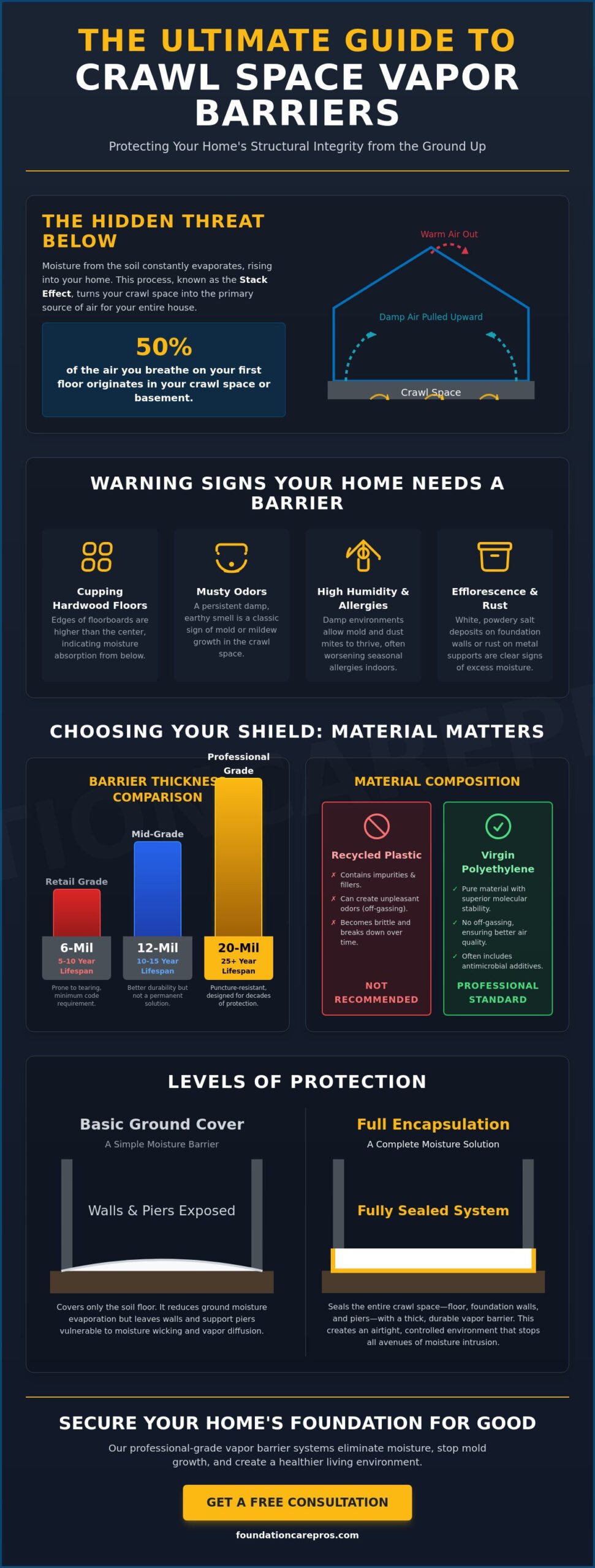
The movement of this air isn’t random; it follows a physical principle known as the Stack Effect. Warm air in the upper levels of your home rises and escapes through the attic or roof. This creates a vacuum that pulls air upward from the lowest point of the house. Because of this cycle, approximately 50 percent of the air you breathe on the first floor originated in your crawl space or basement. If that lower area is damp and filled with mold spores, those contaminants will eventually circulate through your living rooms and bedrooms.
Securing your foundation with a professional barrier offers several critical benefits. It prevents the growth of mold by removing the moisture source that fungi need to survive. It also preserves structural integrity by stopping wood rot in floor joists and sills. Beyond safety, a dry crawl space is easier to heat and cool, which leads to improved indoor air quality and more manageable utility costs.
The Science of Moisture Migration
Water vapor naturally moves from areas of high pressure to areas of low pressure. Damp soil under a foundation maintains high vapor pressure, while the crawl space air above it is typically lower. This pressure imbalance forces moisture through the soil surface and even through solid concrete. Capillary action acts like a wick, pulling water through porous materials into the home. Vapor diffusion is the process where moisture moves through materials at a rate determined by their permeability ratings, measured in perms.
Signs Your Home Needs a Professional Barrier
Your home often provides physical warnings when moisture levels are too high. Cupping hardwood floors, where the edges of the planks sit higher than the center, indicate that the wood is absorbing moisture from below. You might also notice rusted floor jacks or a white, powdery substance called efflorescence on foundation walls. These symptoms suggest a high vapor content even if you don’t see standing water. Excessive humidity in these lower areas often correlates with increased seasonal allergies for residents as mold spores and dust mites thrive in damp environments.
Choosing the Right Material: Mil Thickness and Durability
Durability in a vapor barrier basement crawl space project depends on more than just the thickness of the plastic. While many retail stores stock 6-mil polyethylene, this material is typically the bare minimum required by building codes and rarely meets the professional standard for long-term protection. A 6-mil barrier is susceptible to tearing during installation or during routine home maintenance. For a permanent solution, professionals prioritize thickness, material composition, and puncture resistance to ensure the membrane remains intact for decades.
Material composition is a critical differentiator that many homeowners overlook. High-end barriers consist of virgin polyethylene, which is manufactured without the impurities found in recycled plastics. Recycled materials often contain carbon black or other fillers that can lead to off-gassing, creating a distinct, unpleasant odor that travels into the living space. Furthermore, virgin resins offer superior molecular stability. This stability prevents the plastic from becoming brittle or breaking down when exposed to the alkaline environment of a concrete foundation or damp soil.
Puncture resistance ensures the barrier survives the realities of home ownership. If an HVAC technician or plumber needs to access the area, a thin barrier will likely tear under their weight. Professional-grade membranes are also treated with antimicrobial properties. These additives are integrated into the plastic during manufacturing to prevent mold and iron bacteria from colonizing the surface of the barrier itself. If you are concerned about the current state of your foundation, you can learn more about crawl space encapsulation and how high-performance materials protect your home’s value.
6-Mil vs. 12-Mil vs. 20-Mil Barriers
The lifespan of a vapor barrier varies significantly based on its thickness. A standard 6-mil retail sheet may only last 5 to 10 years before it begins to degrade or suffers enough small punctures to lose its effectiveness. In contrast, a 20-mil reinforced membrane is designed for a 25-year lifespan or longer. Thinner barriers frequently fail during routine inspections or equipment repairs. Choosing a 12-mil or 20-mil membrane provides the necessary thickness to withstand foot traffic and the weight of stored items without compromising the moisture seal.
Reinforced vs. Non-Reinforced Membranes
Professional membranes often feature a “scrim,” which is an internal polyester cord or mesh grid laminated between layers of polyethylene. This reinforcement provides exceptional tear resistance that non-reinforced plastic cannot match. Reinforced barriers are essential for any crawl space used for storage or those with heavy equipment like dehumidifiers. These membranes also offer better UV stability and chemical resistance. This prevents the material from weakening when exposed to soil chemicals or the occasional light from open access doors during maintenance.
Vapor Barrier vs. Full Encapsulation: Which Choice is Right?
Choosing between a simple ground cover and a comprehensive seal depends on your specific goals for home protection. A basic vapor barrier basement crawl space installation acts as a primary defense against soil moisture. It’s a cost-effective method to lower humidity levels. However, a ground cover alone leaves foundation walls exposed to dampness and allows outside air to enter through vents. Encapsulation transforms the area into a conditioned space by sealing every entry point for moisture and air. This distinction is the difference between managing a symptom and solving a structural problem.
Performance differences become clear during peak humidity months. A loose-laid plastic sheet reduces evaporation but doesn’t control the air temperature or moisture seeping through masonry. Encapsulation creates a controlled environment that stabilizes the entire home. Verified data suggests that this total system approach can reduce energy bills by 15 to 20 percent. While the initial cost is higher, the long-term savings in utility costs and the prevention of structural repairs often justify the investment for permanent residents who value stability. If you’re weighing the financial and structural benefits, our detailed analysis of whether crawl space encapsulation is worth it examines 2026 building standards and energy efficiency data to help you make an informed decision.
Investing in a full system also impacts the resale value of your property. Home inspectors prioritize foundation health and look for signs of previous moisture damage. A fully encapsulated space provides documented proof of professional care. It signals to future buyers that the home’s structural integrity has been proactively maintained. This transition from a damp, neglected area to a clean, dry environment removes a significant hurdle during the home-selling process.
When a Ground Cover is Sufficient
Ground-only coverage is often sufficient for homes in arid climates or those with excellent natural drainage. The 2021 International Residential Code (IRC) requires a Class 1 vapor retarder for these spaces. To meet this professional standard, the barrier must be continuous with joints overlapping by at least 6 inches and sealed. This setup works for budget-conscious moisture reduction, but it won’t suffice in regions with high water tables where liquid water frequently enters the crawl space.
The Case for Full Encapsulation
Full encapsulation is the professional choice for comprehensive foundation protection. This system integrates high-performance membranes with Foundation Stabilization and Waterproofing techniques. By sealing foundation walls and installing a dedicated dehumidifier, you eliminate the conditions that lead to masonry degradation. This process often includes a sump pump installation to manage liquid water, ensuring the space remains dry regardless of external weather conditions or rising groundwater levels. Understanding how often to replace sump pump systems is an essential part of maintaining this complete waterproofing strategy over the long term.
The Professional Installation Process: Beyond the Plastic
Professional installation transforms a damp, neglected area into a controlled environment. Simply laying plastic on the ground is insufficient for long-term protection. A successful vapor barrier basement crawl space project requires rigorous site preparation and engineered fastening techniques. These steps ensure the membrane remains secure and effective against moisture migration for the life of the home. Precision during this stage prevents the common failures associated with DIY attempts.
Site preparation begins with the removal of all organic debris. Wood scraps, leaves, and cardboard act as food sources for mold if trapped under the plastic. We also level the soil to prevent water from pooling in low spots. Before the first roll of material is laid, any existing foundation cracks must be professionally addressed. This ensures the structural envelope is sound. The installation must begin with a dry surface to prevent trapping existing liquid moisture against the foundation.
Mechanical fastening is a hallmark of professional work. While retail guides suggest using adhesive tape to secure plastic to foundation walls, tape eventually fails. The porous nature of concrete and constant humidity levels cause adhesives to lose their grip over time. Professionals use termination strips and masonry fasteners to create a permanent bond. This prevents the barrier from sagging or pulling away from the wall. It maintains the integrity of the seal regardless of seasonal temperature shifts.
Integration with other moisture management tools is equally vital. A vapor barrier is often one component of a larger strategy. If your home experiences groundwater seepage, the barrier must be integrated with Interior Basement Drainage Systems. This allows water to flow underneath the membrane toward a sump pump without ever entering the crawl space air. This systematic approach ensures that liquid water and water vapor are handled independently and effectively.
Preparation and Debris Management
Removing organic material is the only way to prevent sour odors from developing under the membrane. When wood or paper products decay in a high-humidity environment, they release gases that permeate the floor above. We also verify the integrity of the foundation. Identifying and repairing structural issues before encapsulation is a critical diagnostic step. A dry starting point is necessary for the adhesive components of the system to bond correctly to the masonry.
Precision Sealing and Fastening Techniques
A 12-inch overlap standard is maintained for all seams to prevent vapor bypass at the joints. These seams are then sealed with heavy-duty, waterproof tape designed for subterranean environments. For wall attachments, we use termination strips that distribute pressure evenly across the top edge of the barrier. Sealing around plumbing penetrations and support piers requires custom-fit collars. These small details ensure an airtight seal around every obstacle. If you want to secure your home’s foundation with a professional-grade solution, schedule a crawl space encapsulation assessment with our specialists.
Foundation Care Pros: Expert Moisture Control Systems
Foundation Care Pros approaches every project with a focus on long-term stability and permanent results. We understand that a vapor barrier basement crawl space installation is more than just a home improvement project; it’s a vital safeguard for your home’s structural integrity. Our team prioritizes evidence-based solutions over temporary fixes. We ensure that every component of your moisture management system meets the highest engineering standards. This commitment to quality protects your investment and provides peace of mind for years to come.
We exclusively utilize high-performance, reinforced vapor barriers for every project we undertake. These membranes are engineered to resist tears, punctures, and microbial growth. By selecting materials that exceed standard building codes, we provide a level of durability that retail-grade products cannot match. Our systems are designed to withstand the harsh environment of a foundation, maintaining an airtight seal against soil gases and water vapor. This technical precision is what defines the Foundation Care Pros difference.
Moisture control is often the first step in a broader structural plan. Excess humidity can weaken floor joists and compromise the foundation’s load-bearing capacity. Our moisture solutions are designed to work seamlessly with our I-Beam Wall Braces and foundation pier systems. By creating a dry, stable environment, we ensure that these structural repairs remain effective and protected from corrosion or wood rot. This integrated approach addresses both the cause and the symptoms of foundation distress.
A Holistic Approach to Foundation Health
Our diagnostic process goes beyond surface-level humidity readings. We evaluate the entire foundation to identify hidden vulnerabilities. We adhere to proven engineering standards and utilize industry-leading materials. Our methods are validated by structural engineers and tested in the most demanding conditions, ensuring superior results. We don’t just cover the ground; we secure the entire building envelope to ensure a healthy, dry home.
Take the Next Step Toward a Dry Home
Scheduling a professional inspection is the most effective way to identify the root cause of your moisture problems. During a diagnostic visit, our specialists conduct a thorough assessment of your crawl space or basement. We look for signs of structural shifting, masonry degradation, and vapor intrusion. You’ll receive a clear, methodical plan for remediation based on the specific needs of your property. Protect your home with professional encapsulation today.
Secure Your Home’s Long-Term Structural Integrity
Moisture management is a technical requirement for any stable foundation. Choosing a high-performance vapor barrier basement crawl space system ensures that your home remains protected from the destructive effects of soil evaporation and rising humidity. By prioritizing reinforced materials and mechanical fastening over temporary retail-grade solutions, you secure your property’s value and improve indoor air quality. A systematic approach to encapsulation doesn’t just block water vapor; it transforms your lower levels into a clean, dry environment that supports the entire structure.
Since 2004, Foundation Care Pros has specialized in structural stabilization and expert crawl space encapsulation and waterproofing. As a proud Supportworks Network Member, we utilize engineered standards to deliver permanent results. Our team provides the diagnostic expertise needed to identify root causes and implement verified solutions. Schedule your professional foundation and moisture inspection today to take the first step toward a healthier home. Your foundation is the most critical component of your property, and we’re here to help you protect it with confidence.
Frequently Asked Questions
Is a 6-mil vapor barrier thick enough for a crawl space?
A 6-mil barrier is the minimum thickness required by many building codes, but it is rarely sufficient for professional-grade protection. This material is thin and highly susceptible to punctures from foot traffic or service technicians during routine maintenance. Professionals recommend a 20-mil reinforced membrane for a durable vapor barrier basement crawl space solution. Thicker materials offer superior puncture resistance and a significantly longer service life compared to standard retail-grade plastic.
How much does it cost to install a vapor barrier in a crawl space?
The total investment for a vapor barrier installation depends on several variables, including the square footage of the area and the amount of debris removal required. Factors such as soil leveling and the need for mechanical fastening to foundation walls also influence the final cost. Homeowners should check their specific foundation type and environmental conditions with a structural specialist to ensure the selected system provides permanent moisture control for their property.
Can I install a vapor barrier over a dirt floor myself?
While DIY installation is possible, achieving a permanent, airtight seal over a dirt floor is technically challenging. Professional installation involves meticulous site preparation and the use of specialized masonry fasteners that tape alone cannot replace. Improperly installed barriers can trap moisture against wood framing or pull away from walls, leading to continued humidity issues. A methodical, professional approach ensures the system remains functional and secure for the life of the home.
Do I need a dehumidifier if I have a vapor barrier?
A dehumidifier is often necessary to manage humidity levels within the air, even after a barrier is installed. While a vapor barrier blocks moisture from the soil, it does not address humidity that enters through foundation vents or masonry cracks. Integrating a dehumidifier with a professional vapor barrier basement crawl space system provides comprehensive climate control. This combination effectively prevents mold growth and protects structural wood from rot by keeping relative humidity below 50 percent.
How long does a professional crawl space vapor barrier last?
A professional-grade 20-mil vapor barrier is designed to last 25 years or longer when installed correctly. High-performance membranes made from virgin polyethylene are resistant to the chemical degradation often found in damp soil environments. In contrast, standard retail-grade plastic may begin to break down or tear within five to ten years. Investing in professional-grade materials ensures the membrane survives routine maintenance and provides a permanent barrier against ground moisture.
Will a vapor barrier stop mold from growing in my basement?
A vapor barrier stops mold by eliminating the primary source of moisture that fungi need to colonize organic materials. Mold requires high humidity levels to grow on floor joists and subflooring. By blocking soil evaporation, the barrier lowers the relative humidity in the space below the threshold where mold can survive. For complete protection, homeowners should address all moisture entry points, including foundation wall seepage and outside air leaks, through a full encapsulation system.
Should a vapor barrier cover the crawl space walls or just the floor?
Covering only the floor is a basic ground cover solution, but professional standards often require extending the barrier up the foundation walls. This process prevents moisture from seeping through porous masonry and entering the home’s air supply. When the membrane is mechanically fastened to the walls and sealed at the seams, it creates a complete moisture envelope. This holistic approach is the most effective way to ensure long-term structural health and improved indoor air quality.
Does a vapor barrier help with radon gas mitigation?
A high-quality vapor barrier can help reduce the infiltration of soil gases, but it is not a substitute for a dedicated radon mitigation system. While the membrane provides a physical block against gas migration, radon is a pressurized gas that often requires active ventilation for safe removal. If high radon levels are a concern, homeowners should consult with a specialist to integrate a sub-membrane depressurization system with their professional vapor barrier installation. A complete moisture management plan also includes evaluating mechanical components like your sump pump; knowing how often to replace sump pump equipment ensures your entire groundwater defense system remains reliable year after year.